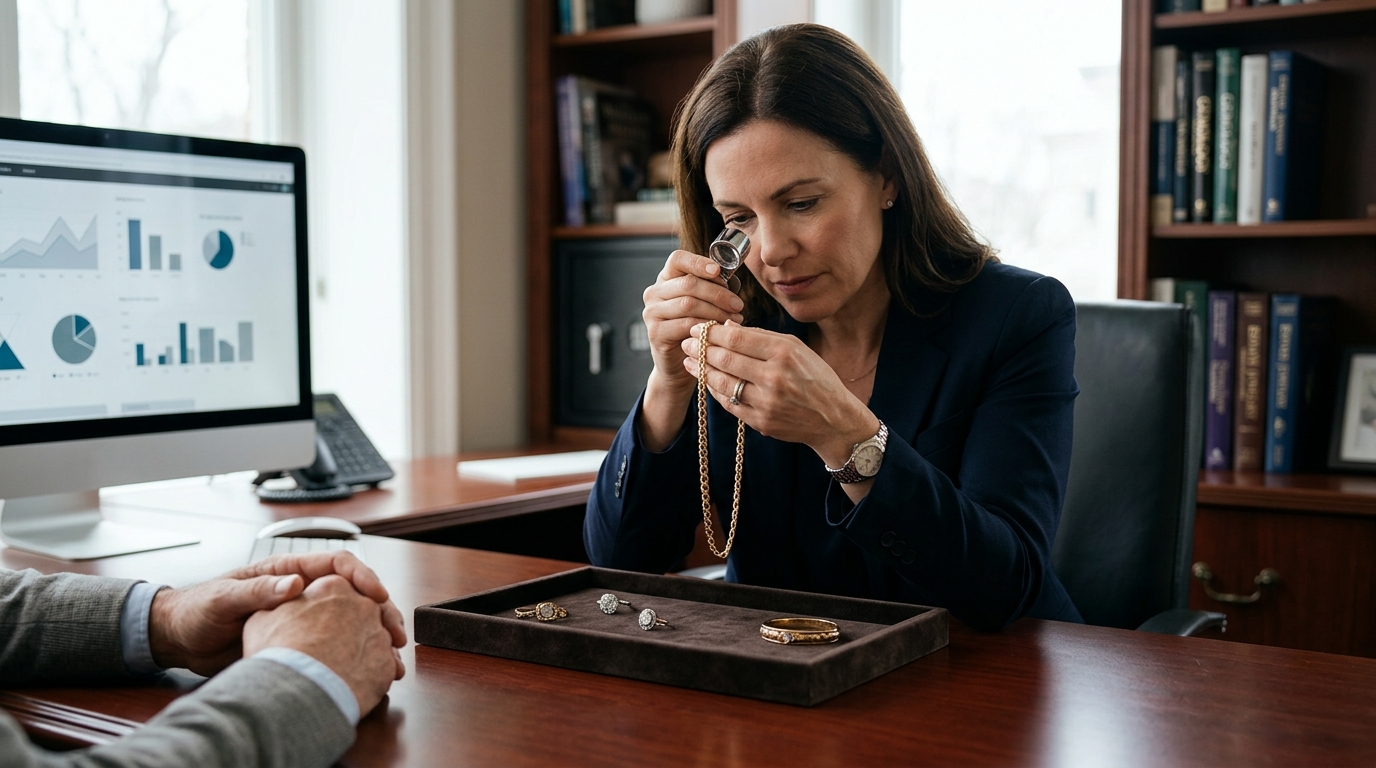
Thinking about selling gold jewelry? Before you walk into any buyer's shop, it helps to understand exactly how your pieces are evaluated. Gold jewelry value is not based on what you originally paid at retail. Instead, professional gold buyers assess a combination of measurable factors, starting with the gold content itself. Whether you own a 14K chain, an 18K bracelet, or a box of inherited estate pieces, the valuation process follows the same core principles. This guide breaks down every factor so you can walk in confident and walk out with a fair offer.
What Is Melt Value and Why It Matters
Melt value is the most fundamental concept in gold jewelry valuation. It represents the worth of the raw gold in your piece if it were melted down and refined into pure gold. This number is the absolute floor for any legitimate cash offer, and every reputable buyer starts here.
Retail prices include design costs, branding, labor, and marketing overhead. None of those costs are recaptured when you sell. That is why the resale value of gold jewelry is grounded in the intrinsic value of the materials, not the price tag from the store.
Karat Purity: The Single Biggest Factor
Karat is a measure of gold purity expressed as parts out of 24. A piece stamped 24K is essentially 100% pure gold, while 14K contains 58.3% gold and 41.7% alloy metals. To calculate the purity percentage of any karat value, simply divide the karat number by 24.
Where to Find Karat Stamps
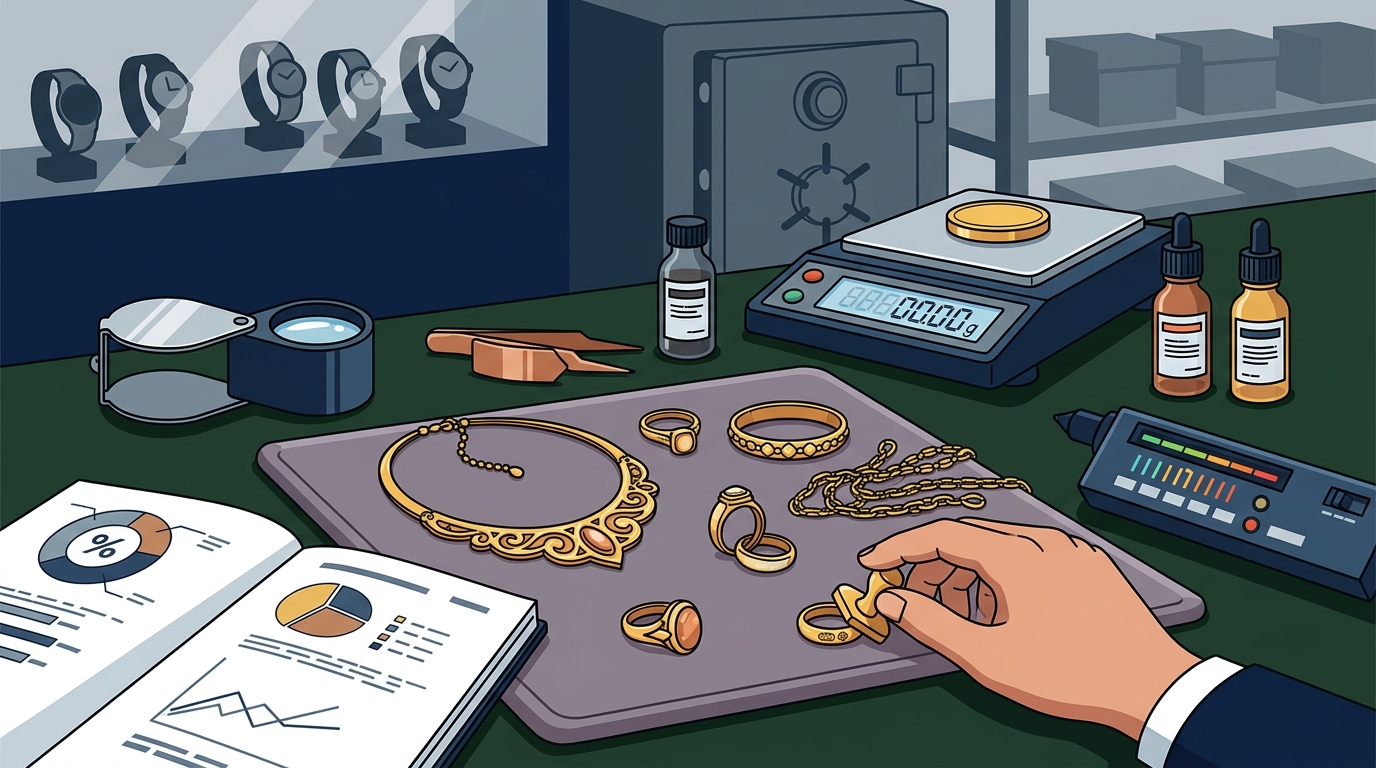
Hallmark stamps are typically located inside a ring band, near a necklace clasp, or on the back of a pendant. Common markings include "10K," "14K," "18K," or European fineness numbers like "750" (meaning 75% gold). However, not all stamps are accurate, and counterfeits exist. That is why professional gold buyers test every piece before making an offer.
Why Pure 24K Gold Is Rarely Used in Jewelry
Pure gold is a soft metal, too soft for everyday wear. Manufacturers add metals like copper, silver, or nickel to increase strength and durability, which is why lower-karat alloys like 14K and 18K dominate the estate jewelry market.
Weight: Grams, Troy Ounces, and Pennyweights
Weight is measured in grams on a precision digital scale. A heavier piece contains more total gold and commands a higher melt value. However, weight alone is misleading without knowing the karat.
Gold professionals use troy ounces as the standard unit. One troy ounce equals 31.1035 grams, which is slightly heavier than the regular avoirdupois ounce used for everyday items. Many jewelers and silver buyers also reference pennyweights (dwt), where one troy ounce equals 20 pennyweights.
The Gold Spot Price and Daily Fluctuations
The spot price is the real-time market rate for one troy ounce of pure gold. It changes daily based on global supply, demand, currency values, and economic conditions. You can check live pricing on the Lake Worth Gold Mine daily metal prices page before your visit.
The Core Formula
Once you know karat purity, weight, and the current spot price, the calculation is straightforward: (Weight in grams x Purity percentage) x Spot price per gram = Gold content value. Buyers then offer a percentage of that calculated value, typically between 75% and 90% depending on the buyer and the quantity being sold.
Factors Beyond Melt Value
While melt value sets the floor, several additional factors can push a piece's worth higher.
Brand and Designer Identity
Pieces from recognized brands like Tiffany & Co., Cartier, or David Yurman often carry a premium above melt value. If you own designer pieces, a knowledgeable buyer like Lake Worth Gold Mine can recognize and pay for that added value.
Gemstones and Diamonds
Jewelry set with diamonds or precious gemstones adds another layer of value. Reputable buyers evaluate stones separately from the gold. Lake Worth Gold Mine employs experienced evaluators who assess diamonds and estate jewelry on site.
Age and Historical Significance
Age alone does not increase gold jewelry value. However, genuinely antique pieces from notable makers or recognized historical periods may carry collector premiums. Most aged jewelry without documented provenance is assessed at standard melt rates.
Karat Comparison Table
| Karat | Gold Purity (%) | Fineness Stamp | Common Uses |
|---|---|---|---|
| 10K | 41.7% | 417 | Budget rings, everyday jewelry |
| 14K | 58.3% | 585 | Engagement rings, bracelets, earrings |
| 18K | 75.0% | 750 | Luxury jewelry, wedding bands |
| 22K | 91.6% | 916 | Traditional/ceremonial jewelry |
| 24K | 99.9% | 999 | Bullion bars, investment coins |
Key Takeaways
- Melt value, based on gold content and the spot price, is the baseline for every offer.
- Karat purity and physical weight are the two variables that matter most in calculating gold content.
- The spot price of gold changes daily, so timing can affect your payout.
- Retail purchase price has essentially no bearing on resale value.
- Designer branding, gemstones, and historical significance can add premiums above melt value.
- Broken or damaged gold is still worth its weight in gold content.
- Always visit a reputable, transparent buyer who tests and weighs your pieces in front of you.
Frequently Asked Questions
How do gold buyers determine the value of my jewelry?
Buyers identify the karat purity (via stamps and testing), weigh the piece on a precision scale, and multiply the pure gold weight by the current spot price. They then offer a percentage of the resulting melt value.
Does the condition of my gold jewelry affect its value?
For pieces sold at melt value, physical damage has minimal impact. The gold content remains the same regardless of shape or condition. Broken chains and bent pieces are typically assessed at standard melt rates.
What is the difference between karat and carat?
Karat (K) measures gold purity as parts out of 24. Carat (ct) is a unit of weight used to measure diamonds and gemstones. They are not interchangeable.
Why is my offer lower than the retail price I paid?
Retail prices include design, labor, marketing, and store markup. Resale value is based on the intrinsic material value, which is always lower than the original retail price.
Can I sell gold-plated jewelry?
Gold-plated items contain only a thin outer layer of gold, so their melt value is minimal compared to solid gold. A professional evaluation can confirm whether your piece is solid or plated.
How often does the gold spot price change?
The gold spot price fluctuates continuously during global trading hours, which means the price can shift multiple times within a single day. Check current metal prices before selling.
What karats of gold do buyers accept?
Most reputable buyers, including Lake Worth Gold Mine, accept all standard karats from 10K through 24K, as well as gold bullion and coins.
Should I get multiple quotes before selling?
Getting more than one offer is always smart. However, focus on buyers who show you their scale readings and explain their calculations transparently rather than simply chasing the highest number.
Get a Free, No-Obligation Gold Evaluation Today
Ready to find out what your gold jewelry is really worth? Lake Worth Gold Mine, voted Best of Palm Beach County six years in a row, offers free on-the-spot evaluations with transparent pricing. Visit our safe, stand-alone store at Turnpike and Lake Worth Road or book an appointment online to skip the wait. Bring your gold, diamonds, watches, or estate jewelry and get a fair offer backed by years of trusted service in Palm Beach County.