
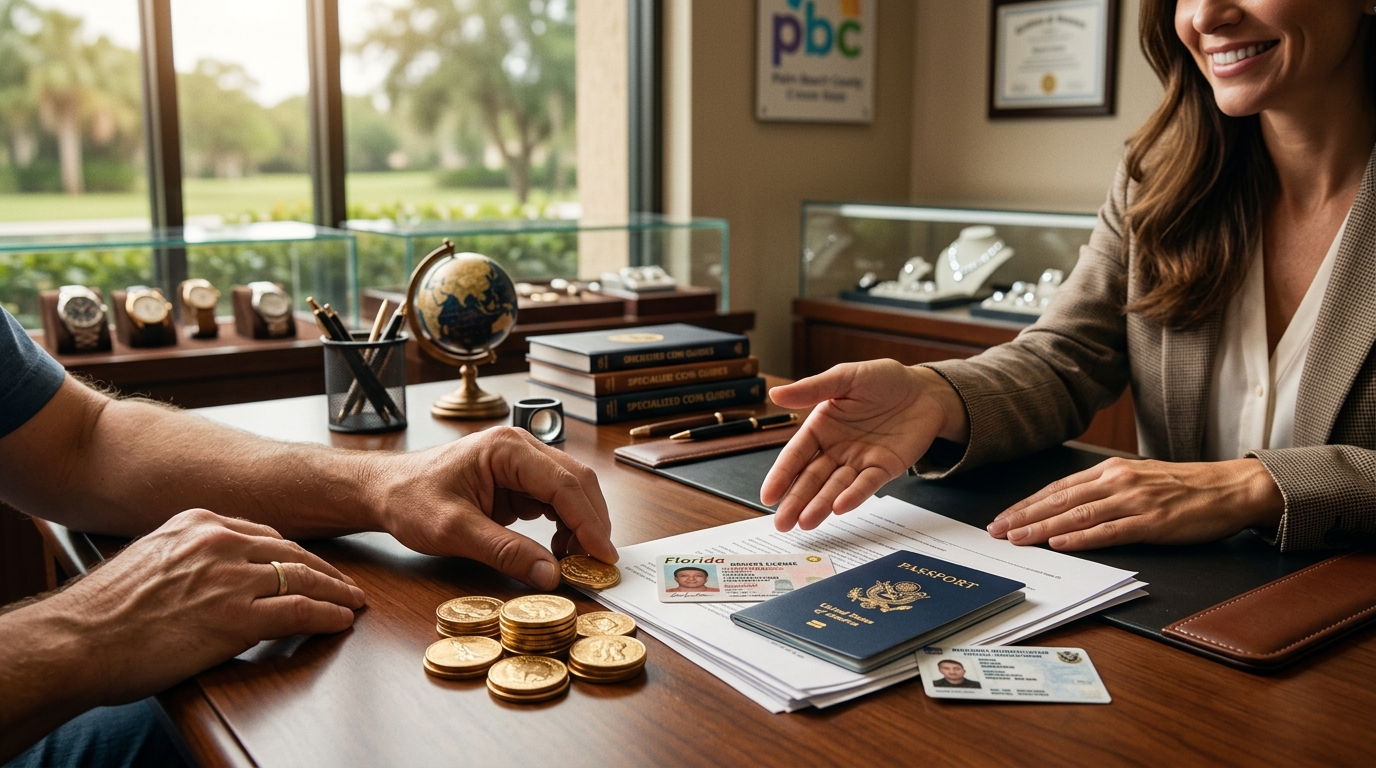
Planning to sell gold coins at a local buyer in Palm Beach County or anywhere in Florida? Before you walk through the door, you need to know exactly which documents to bring. Florida law imposes specific identification and record-keeping requirements on secondhand precious-metals transactions. Having the right paperwork ready speeds up your sale, protects your legal interests, and helps you get paid faster. In this guide, we cover every document you should prepare, explain Florida's legal requirements, and share tips for maximizing the value of your gold coins at a trusted local buyer like Lake Worth Gold Mine.
Government-Issued Photo ID
The single most important item to bring is a valid, government-issued photo ID. Under Florida's secondhand dealer statutes, licensed buyers are required to verify seller identity before completing any precious-metals purchase. Acceptable forms include a state driver's license, a state-issued ID card, a valid U.S. passport, or a military identification card.
A Government-issued photo ID is a document produced by a federal, state, or local authority that displays your photograph, full legal name, and date of birth. Without one, no reputable dealer in Palm Beach County can legally complete your transaction.
What If Your ID Is Expired?
Most Florida dealers cannot accept expired identification. If your license is nearing expiration, renew it before your appointment. You can book an appointment at Lake Worth Gold Mine to lock in a convenient time while you get your ID updated.
What Florida Law Requires From Sellers
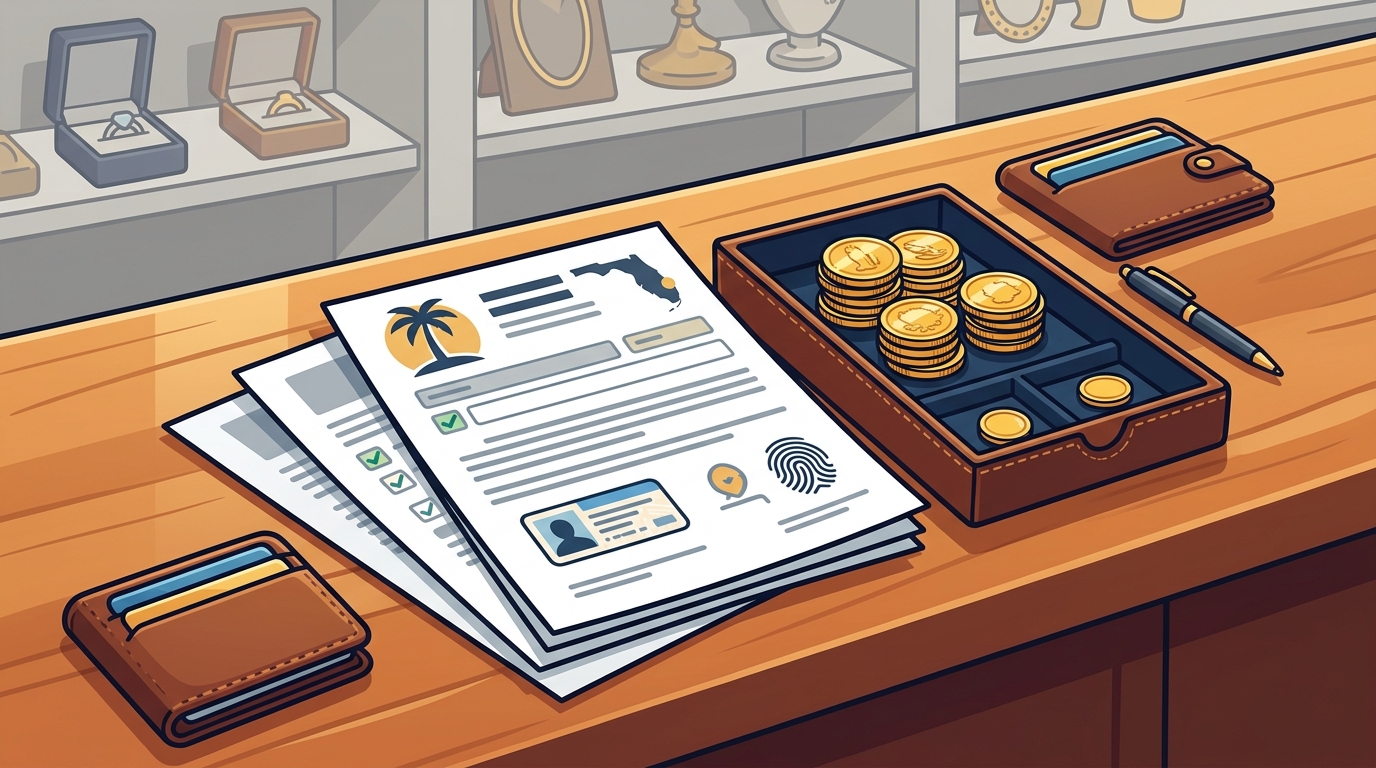
Florida Statute Chapter 538 governs secondhand dealers who buy precious metals. Dealers must comply with strict record-keeping requirements, which involve completing approved transaction forms, verifying identification, obtaining the seller's thumbprint, and delivering detailed transaction records to local law enforcement. These rules exist to prevent trafficking in stolen property.
The Thumbprint Requirement
Yes, Florida law requires your thumbprint on the transaction record. This is standard practice at every licensed gold buyer in the state and is not something to worry about. It simply confirms you are the person whose ID was verified.
Holding Period
A holding period is a legally mandated window during which a dealer must retain purchased items before reselling them. In many Florida counties, secondhand dealers must hold purchased items for a set number of days, giving law enforcement time to check for stolen property reports. This does not delay your payment at reputable buyers like Lake Worth Gold Mine's gold-buying service.
Supporting Documentation That Boosts Your Payout
While a photo ID is legally required, bringing additional paperwork can significantly increase your offer. Experienced numismatists can quickly identify scarce dates, mintmarks, or varieties that carry significant premiums, but supporting documents make their job easier and your coins more valuable.
Gather any receipts, certificates of authenticity, grading reports, or original mint packaging associated with the coins. If your coins have been graded by PCGS or NGC, bring the slabs and certification numbers. These third-party grades authenticate the piece, document its condition, and increase buyer confidence and resale value.
Inherited Coins
If you inherited a coin collection, bring any estate documents, appraisals, or inventory lists from the estate. This helps establish provenance and can reveal coins worth far more than melt value. Lake Worth Gold Mine's team regularly evaluates estate jewelry and coin collections.
IRS Reporting and Tax Documents
Capital gains tax is a tax levied only on the profit from selling an asset above its original purchase price. When you sell gold coins, the IRS may require reporting depending on the type, quantity, and sale amount.
Form 1099-B is used to report information such as what item was sold, when it was sold, proceeds, and the seller's name and address. Dealers must report when they purchase certain quantities of specific gold products listed on the IRS Reportable Items list. For example, selling 25 or more one-ounce Gold Maple Leafs in a single transaction triggers a 1099-B filing.
To protect yourself at tax time, keep records of your original purchase price, date acquired, and any appraisal documentation. Check today's gold spot price so you understand the current market value before you sell.
Complete Document Checklist Table
| Document | Required? | Why It Matters |
|---|---|---|
| Government-issued photo ID (driver's license, passport, military ID) | Yes (Florida law) | Verifies seller identity; transaction cannot proceed without it |
| Thumbprint | Yes (Florida law) | Recorded on dealer's transaction form per Chapter 538 F.S. |
| Original purchase receipts | No, but recommended | Establishes cost basis for capital gains calculation |
| Certificates of authenticity | No, but recommended | Confirms genuineness and may increase offer price |
| Third-party grading reports (PCGS/NGC) | No, but recommended | Documents condition and boosts buyer confidence |
| Original mint packaging | No, but recommended | Adds collectible value for numismatic coins |
| Estate or inheritance documentation | No, but recommended | Proves provenance for inherited collections |
| Coin inventory list | No, but recommended | Speeds up evaluation; ensures nothing is overlooked |
Key Takeaways
- A valid government-issued photo ID is legally required to sell gold coins in Florida.
- Florida's Chapter 538 mandates identity verification, thumbprinting, and transaction reporting to law enforcement.
- Certificates of authenticity, grading reports, and original packaging can increase your payout.
- Keep purchase receipts to accurately calculate capital gains taxes.
- The IRS may require dealers to file Form 1099-B for certain gold coin sales.
- Inherited coin sellers should bring estate documents to establish provenance.
- Visit a trusted, award-winning buyer like Lake Worth Gold Mine for a fair, transparent evaluation.
Frequently Asked Questions
Do I need a government ID to sell gold coins in Florida?
Yes. Florida law requires licensed precious-metals buyers to verify your identity with a valid government-issued photo ID before any transaction. A driver's license, passport, or military ID all work.
Will I need to give a thumbprint?
Yes. Under Florida Statute Chapter 538, dealers must obtain the seller's thumbprint as part of the official transaction record. This is standard practice across the state.
What happens if I do not have a receipt for my gold coins?
You can still sell your coins without a receipt. However, having purchase documentation helps establish your cost basis for tax purposes and may support a higher offer from the dealer.
Are gold coin sales reported to the IRS?
Some are. If you sell certain types and quantities of gold coins listed on the IRS Reportable Items list, the dealer is obligated to file a Form 1099-B with your name, address, and sale proceeds.
Do I need to pay taxes on gold coin sales?
If you sell gold coins for more than you paid, the profit is subject to capital gains tax. Rates vary based on holding period and total gain. Consult a tax professional for personalized advice.
Does grading my coins before selling increase the price?
It can. Third-party grading from organizations like PCGS or NGC authenticates the coin and documents its condition, which often increases buyer confidence and resale value, leading to stronger offers.
Where can I sell gold coins near Palm Beach County?
Lake Worth Gold Mine, voted Best of Palm Beach County six years in a row, buys gold coins, bullion, and collectible coins. The store is conveniently located at the Turnpike and Lake Worth Road. Visit the customer reviews page to see why local sellers trust them.
Is Florida sales tax charged on gold coin transactions?
Florida exempts qualifying gold and silver coins from sales tax. Beginning July 1, 2026, Florida HB 999 further recognizes certain gold and silver coins as legal tender for payment of debts.
Ready to Sell Your Gold Coins?
Gather your ID, any supporting documents, and your coins, then visit Lake Worth Gold Mine for a free, no-obligation evaluation. Voted Best of Palm Beach County six years running, the team offers fair, transparent pricing in a safe, stand-alone store at the Turnpike and Lake Worth Road. Book your appointment today and walk out with cash in hand.