How Gold Buyers in Palm Beach County Determine the Value of Gold Jewelry
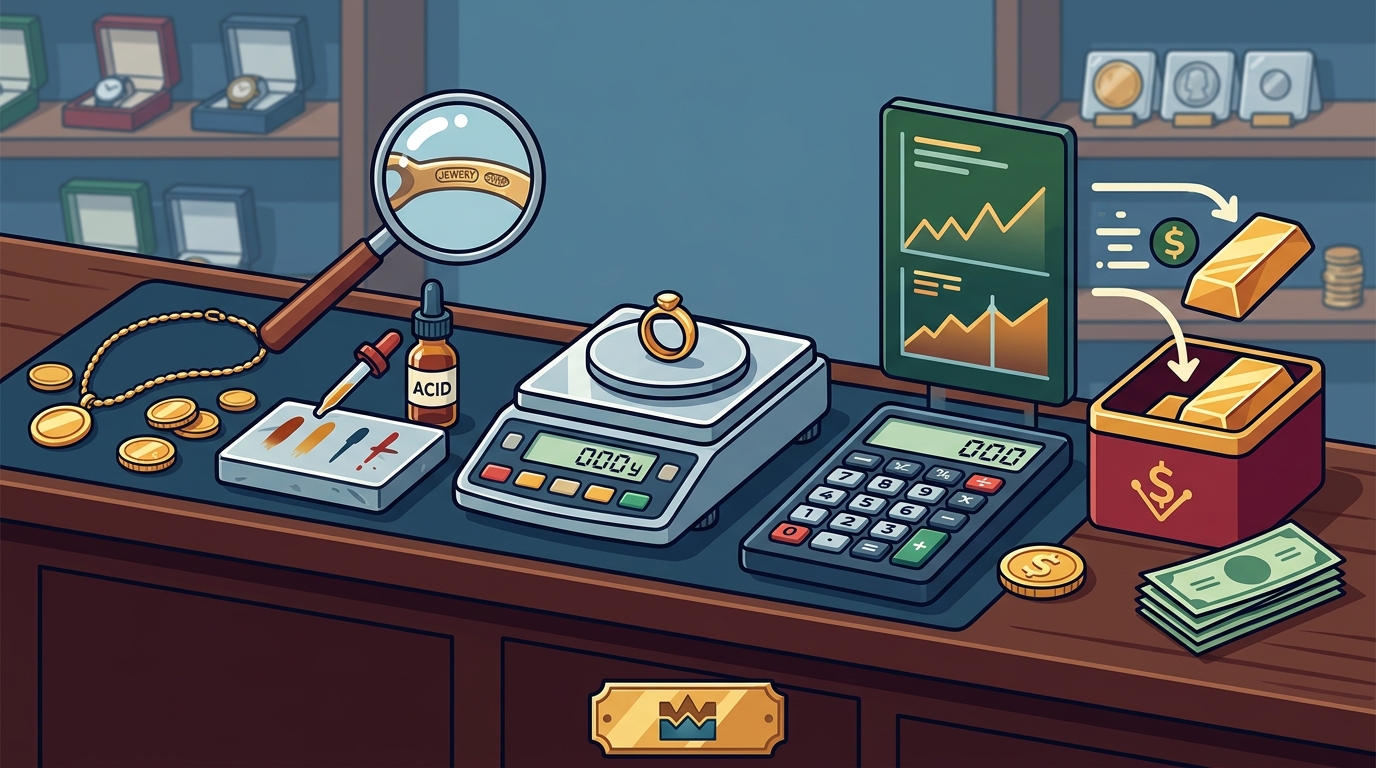
Gold buyers in Palm Beach County determine the value of gold jewelry by testing its purity, weighing it on certified scales, calculating the spot price, and applying refining deductions. This guide explains the four-step valuation process used by licensed dealers like the Lake Worth Gold Mine. It covers how to verify karatage, measure troy ounces, understand melt value, and navigate market fluctuations to ensure you receive a fair and transparent offer for your items.
Gold Purity Testing
Gold purity testing is the process of determining the exact concentration of gold in an alloy. Jewelry is rarely made of 24-karat pure gold because pure gold is too soft for daily wear. Instead, it is mixed with other metals like copper, silver, or zinc to create harder alloys such as 14-karat or 18-karat gold. The first step in valuation is identifying this karatage accurately.
Visual Inspection and Hallmarks
Experienced buyers start with a visual inspection of the item's hallmarks. These are small engravings on the jewelry that indicate the metal content. Common stamps include 10K, 14K, 18K, 21K, and 24K. In the United States, 14-karat gold is the most common standard for jewelry. It contains 58.3% pure gold. An 18-karat piece contains 75% pure gold. While hallmarks are a strong indicator, they are not always reliable. Counterfeit stamps exist, and some older or handmade pieces may lack standard markings.
Electronic and Acid Testing
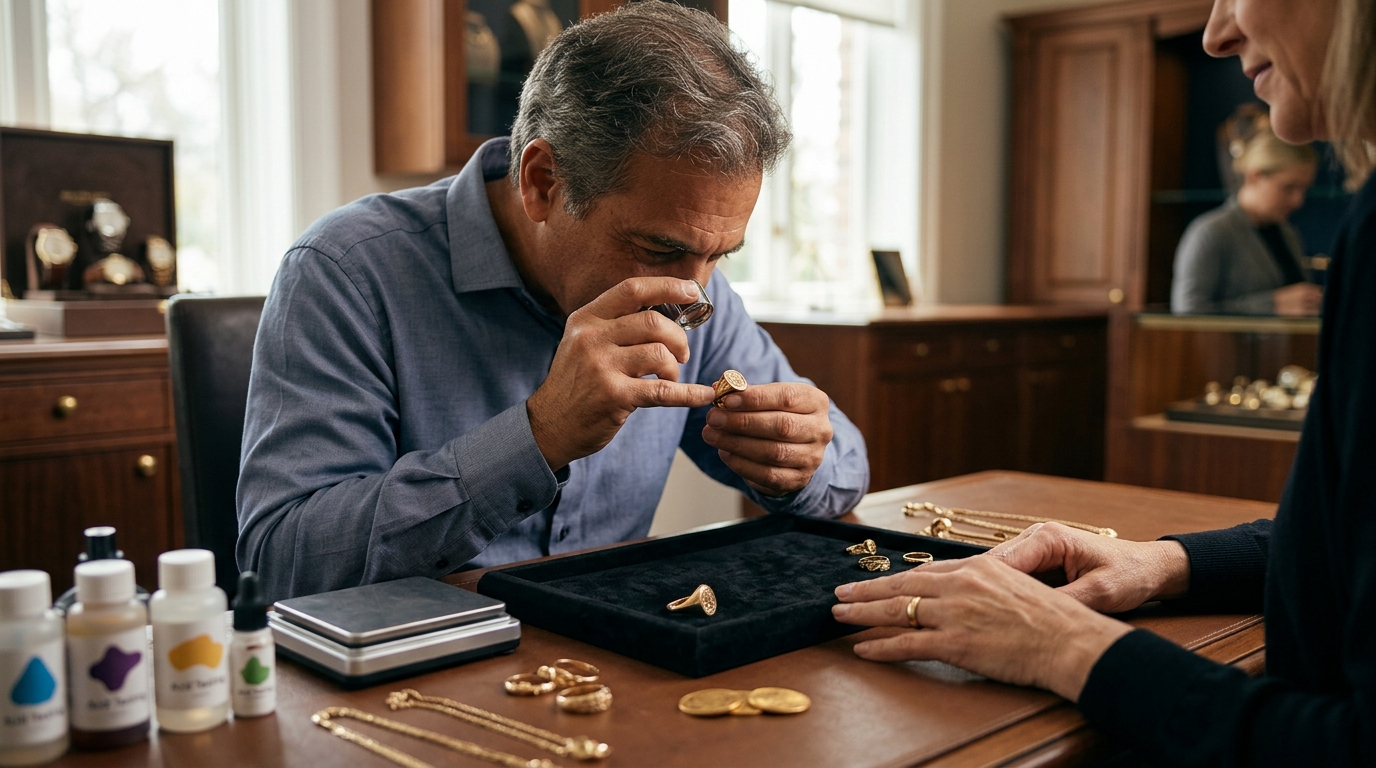
To verify the hallmark, dealers use electronic testers or acid kits. Electronic testers measure the electrical conductivity of the metal. Different alloys have different conductivity levels, allowing the device to estimate the karatage. Acid testing involves applying a specific acid to a small scratch on the metal. If the metal dissolves, it is not as pure as the stamp suggests. At the Lake Worth Gold Mine, our team uses certified scales and testing equipment to verify purity in front of you. This transparency ensures that the karatage used in the final calculation is accurate and fair.
Weight Measurement
Weight measurement is the second critical component of gold valuation. The weight of the item determines the total amount of gold present. In the precious metals industry, weight is measured in troy ounces, not standard avoirdupois ounces. One troy ounce is approximately 31.1 grams. This distinction is vital for accurate pricing. A standard ounce is 28.35 grams, which would result in a significant underpayment if used for gold.
Certified Scales and Precision
Licensed dealers must use certified scales to ensure legal and accurate measurements. In Florida, second-hand dealers are required to abide by state regulations regarding weighing devices. The Lake Worth Gold Mine operates with certified scales that are regularly inspected. We sort, test, and weigh your items in front of you. This open process allows you to see the exact weight recorded. Precision matters because even a fraction of a gram can affect the final payout, especially for high-value items like gold bars or large chains.
Handling Complex Items
Some jewelry items have complex shapes or contain non-gold components. For example, a gold ring might have a diamond or a gemstone set in it. The weight of the stone is not gold, so it must be accounted for. Dealers often estimate the weight of the gold portion by subtracting the approximate weight of the stones or using specific gravity tests. For scrap gold or broken items, the entire weight is usually considered gold, provided the purity is consistent. Accurate weight measurement ensures that you are paid for every gram of gold you bring in.
Refining Deductions
Refining deductions are the costs associated with processing raw gold into pure bullion. When you sell gold jewelry, the dealer must refine the metal to sell it to the mint or other buyers. This process involves melting, cleaning, and purifying the gold. The cost of this refining is deducted from the gross value of the gold. This deduction is standard in the industry and is necessary to cover the operational costs of turning jewelry into investable gold.
Understanding the Melt Value
The melt value is the price of gold based on its weight and purity, before any deductions. It is calculated by multiplying the weight in troy ounces by the spot price and the purity percentage. For example, a 10-gram 14-karat gold chain has a gross value based on the spot price. However, the dealer must refine this gold. The refining deduction is typically a percentage of the gross value. This percentage can vary depending on the quantity and the current market conditions. Larger quantities often have lower per-gram refining costs, which can result in a higher net payout per ounce.
Why Deductions Are Necessary
It is important to understand that refining deductions are not a hidden fee. They are a transparent part of the business model. Dealers buy gold at a price below the spot price to cover their refining costs and profit margin. At the Lake Worth Gold Mine, we explain this process clearly. We do not use mail-in envelopes or hidden fees. We make our offer based on the daily spot market prices and standard refining deductions. This ensures that you know exactly how your final offer is calculated. Transparency in deductions builds trust and ensures a fair transaction.
Spot Price Calculation
Spot price calculation is the final step in determining the value of gold jewelry. The spot price is the current market price of gold per troy ounce. It fluctuates constantly based on global supply and demand, economic indicators, and geopolitical events. Dealers use the live spot price at the time of the transaction to calculate the value of your item. This ensures that you are paid based on the current market value, not a stale or outdated price.
Live Market Data
Market Volatility and Timing
Gold prices can be volatile. A price that is high one day might be lower the next. This volatility means that timing can affect your payout. However, for most jewelry items, the difference between daily fluctuations is small compared to the overall value. The key is to use a dealer who uses the live spot price at the time of payment. The Lake Worth Gold Mine provides up-to-the-minute daily market prices for gold, silver, platinum, and palladium. This allows you to see the current market value before you make your decision. By understanding how the spot price is calculated, you can make informed decisions about when and where to sell your gold.
Valuation Method Comparison
Understanding the different components of gold valuation helps you evaluate offers from different dealers. The table below summarizes the key factors that influence the final payout for gold jewelry.
| Factor | Description | Impact on Payout |
|---|---|---|
| Purity (Karatage) | Percentage of pure gold in the alloy | Higher karatage results in a higher gross value |
| Weight (Troy Ounces) | Mass of the gold item | Heavier items have a higher total value |
| Spot Price | Current market price per troy ounce | Fluctuates daily; higher spot price increases value |
| Refining Deduction | Cost of processing gold into bullion | Reduces the gross value to determine the net offer |
This table highlights that the final offer is a function of these four variables. A dealer who offers a high spot price but applies a large refining deduction may result in a lower net payout than a dealer with a slightly lower spot price but a smaller deduction. It is essential to ask how the final offer is calculated. At the Lake Worth Gold Mine, we provide a clear breakdown of these factors. We beat all valid licensed competitor offers by ensuring that our refining deductions are fair and our spot prices are current. This approach ensures that you receive the best possible value for your gold.
Key Takeaways
- Gold purity is determined by testing the karatage, which indicates the percentage of pure gold in the alloy.
- Weight is measured in troy ounces, not standard ounces, to ensure accurate valuation.
- Refining deductions are standard costs associated with processing gold and are transparently applied.
- The spot price is the live market price of gold and fluctuates based on global economic conditions.
- Licensed dealers like the Lake Worth Gold Mine use certified scales and testing equipment to ensure accuracy.
- Transparency in the valuation process is crucial for building trust and ensuring a fair transaction.
- Understanding the four steps of valuation helps you evaluate offers from different dealers.
- Using live market data ensures that you are paid based on the current value of your gold.
Frequently Asked Questions
How do gold buyers test the purity of gold jewelry?
Gold buyers use electronic testers and acid kits to verify the karatage of gold jewelry. These tools measure the conductivity or chemical reaction of the metal to determine its purity. This process ensures that the hallmark on the item is accurate.
What is the difference between troy ounces and standard ounces?
Troy ounces are used for precious metals and weigh approximately 31.1 grams. Standard avoirdupois ounces weigh 28.35 grams. Using troy ounces ensures that the weight of the gold is measured accurately for valuation purposes.
Why are refining deductions applied to gold jewelry?
Refining deductions cover the costs of processing raw gold into pure bullion. This includes melting, cleaning, and purifying the metal. These deductions are standard in the industry and are necessary to cover the operational costs of the dealer.
How is the spot price of gold determined?
The spot price is the current market price of gold per troy ounce. It is determined by global supply and demand, economic indicators, and geopolitical events. Dealers use live data to apply the current spot price to the valuation of your item.
Does the condition of the jewelry affect its value?
For scrap gold, the condition of the jewelry does not affect its value. The value is based solely on the weight and purity of the gold. However, for designer or antique jewelry, the condition and brand may add additional value beyond the melt value.
Can I sell broken or damaged gold jewelry?
Yes, you can sell broken or damaged gold jewelry. The value is based on the weight and purity of the gold, not the condition of the item. Dealers like the Lake Worth Gold Mine buy broken, outdated, or damaged gold items at fair market value.
How quickly can I get paid for my gold?
Payment is typically made at the time of the transaction. Licensed dealers like the Lake Worth Gold Mine pay you on the spot. There is no waiting for payment or shipping items via mail-in envelopes. This ensures a fast and secure transaction.
What documents do I need to bring when selling gold?
You typically need a valid government-issued photo ID. This is required by law for second-hand dealers to record the transaction. If you have any certificates of authenticity or appraisals for your jewelry, it is helpful to bring them along, but they are not always necessary for scrap gold.
Conclusion
Understanding how gold buyers in Palm Beach County determine the value of gold jewelry empowers you to make informed decisions. By knowing the four key steps of purity testing, weight measurement, refining deductions, and spot price calculation, you can evaluate offers with confidence. The Lake Worth Gold Mine is a licensed and bonded dealer that provides a transparent and fair valuation process. We use certified scales and live market data to ensure that you receive the best possible price for your gold, silver, diamonds, watches, and collectibles. Whether you have a single piece of jewelry or an entire estate, our team is ready to help you turn your items into real spending money. Visit our store at the intersection of Lake Worth Road and the Florida Turnpike for a safe and secure transaction. To schedule an appointment or learn more about our services, today.