
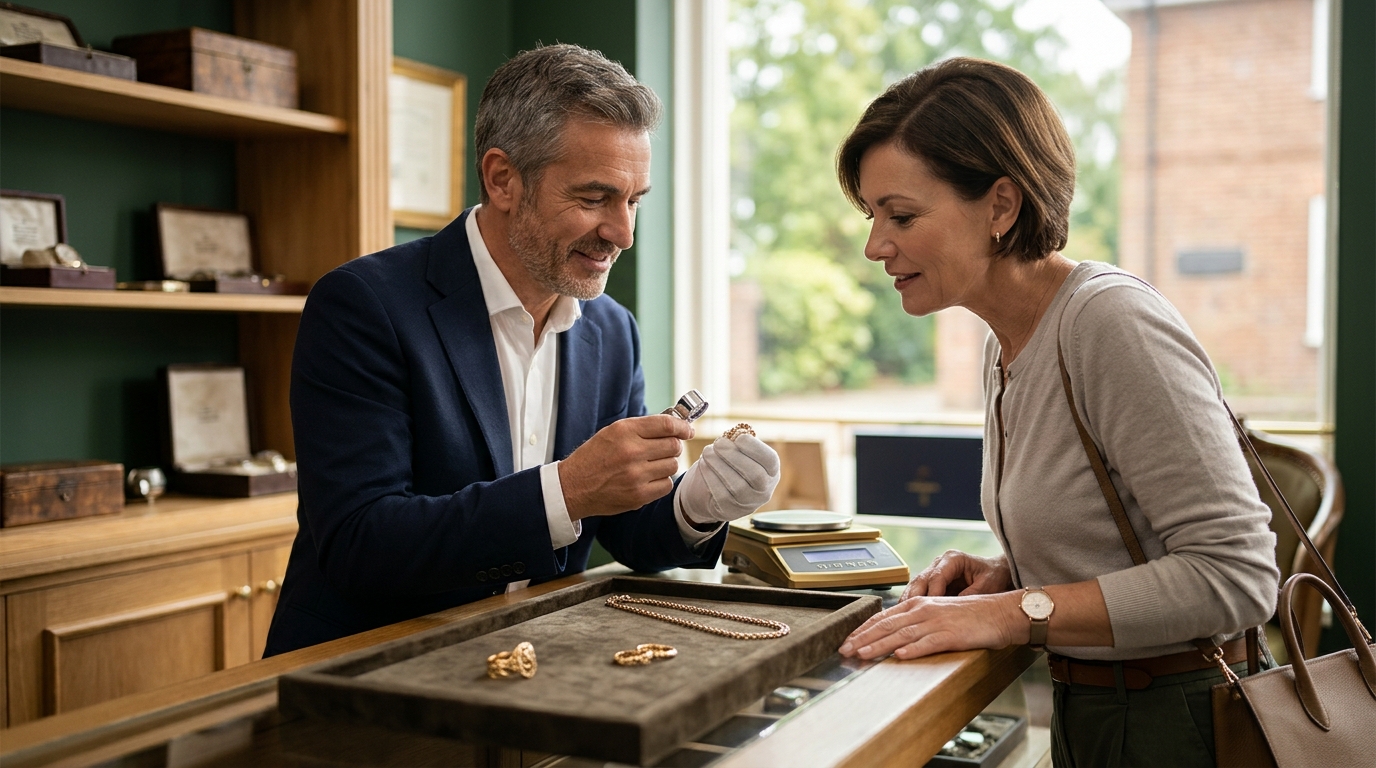
Gold jewelry appraisal is the process of determining the fair market value of an item based on its metal content, weight, and condition. When you sell locally, the buyer tests the karat purity, weighs the piece, and applies the current daily spot price to calculate your payout. This transparent, in-person method ensures you receive accurate compensation without the delays associated with mail-in services. according to Appraisals Jewelers of
The Core Components of a Gold Appraisal
Understanding the variables that drive your offer helps you evaluate quotes with confidence. A professional appraisal is not a guess; it is a calculation based on objective market data. The three primary factors are karat purity, total weight, and the daily spot price.
Karat Purity and Metal Content
Karat purity is a measure of the proportion of pure gold in an alloy. Pure gold is 24 karats, but it is too soft for most jewelry, so it is mixed with other metals like copper or silver. Common jewelry purities include 10k, 14k, and 18k. The buyer will use a testing method to verify the stamp on your item. If a piece is unmarked, the buyer must test it to determine its actual purity before making an offer.
Weight and Tare Weight
Weight is measured in grams or troy ounces. The buyer will weigh the item on a calibrated scale. It is important to note that the weight includes the entire piece, including any stones or clasps, unless the stones are removed. The net weight of the gold is what matters for the metal value calculation.
Daily Spot Price
The spot price is the current market price for one troy ounce of pure gold. This price fluctuates constantly based on global economic conditions. A local buyer will use the spot price from the day of your visit. This ensures your offer reflects the real-time value of the metal in your jewelry.
Testing Methods Used by Local Buyers
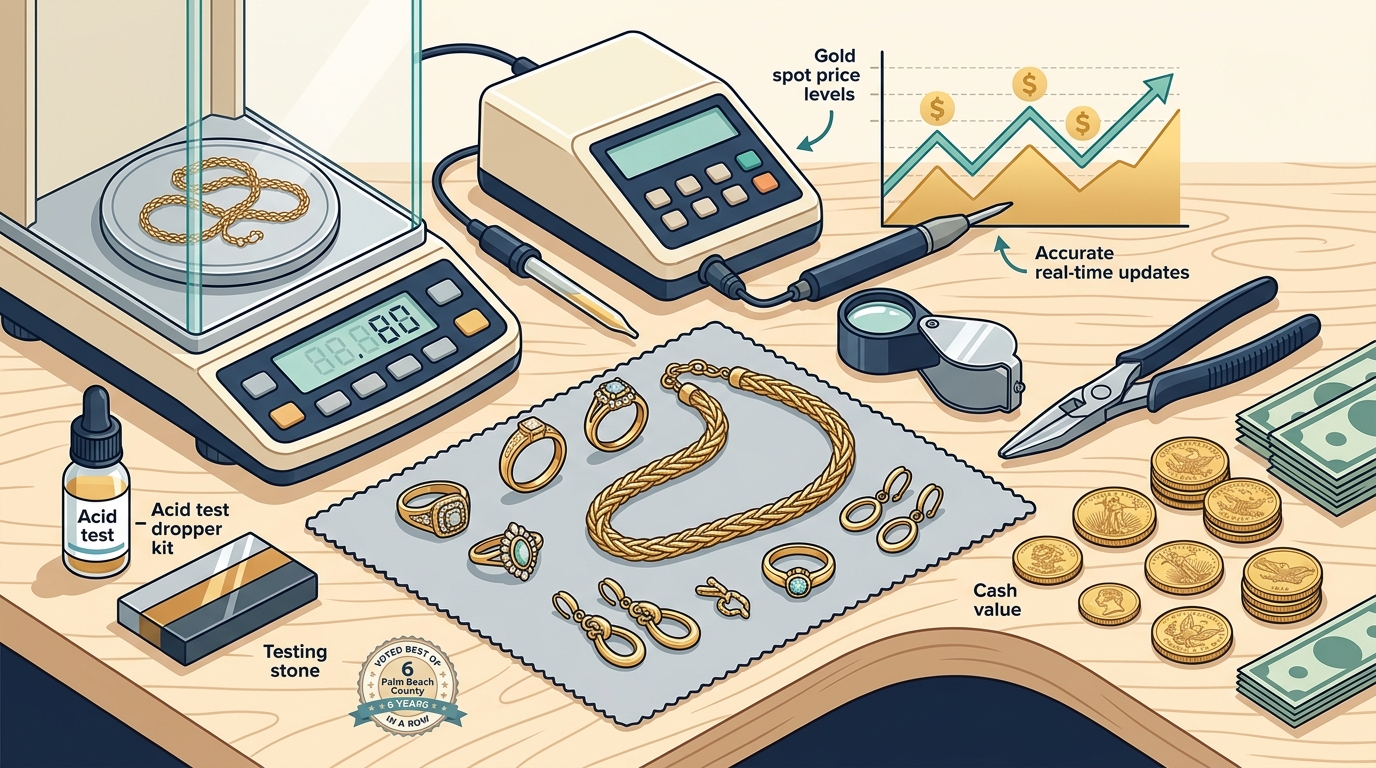
Local buyers use specific tools to verify the authenticity and purity of your gold. These methods are non-destructive and quick. At the Lake Worth Gold Mine, our team sorts, tests, and weighs your items in front of you. This transparency is a key part of our service.
Electronic Testing
Electronic testers use electromagnetic induction to determine the conductivity of the metal. This method is fast and accurate for most gold alloys. It does not damage the item. The tester provides a reading that corresponds to a specific karat purity. This is the most common method used in retail environments.
Acid Testing
Acid testing involves scratching a small area of the metal and applying a chemical solution. The reaction of the metal to the acid indicates its purity. This method is less common in modern retail stores due to the potential for minor surface damage. However, it is a reliable backup method for verifying purity.
Visual Inspection
Experienced buyers also use visual inspection to assess the condition of the item. They look for hallmarks, stamps, and signs of wear. The condition of the jewelry can affect its value if it is being sold as a collectible or designer piece. For scrap gold, condition is less important, but it still helps the buyer understand the item's history.
Scrap Value vs. Retail Value
When Retail Value Applies
Retail value applies when the jewelry is a designer piece, such as Tiffany or Cartier. These items have a brand premium that exceeds their metal content. A local buyer who specializes in designer jewelry may offer a higher price based on the item's retail history. The designer jewelry buyers at Lake Worth Gold Mine evaluate these pieces for both metal and brand value. according to Appraisals Jewelers of
Why Scrap Value is Standard
Scrap value is the standard for most gold jewelry sales because it is the most liquid form of value. The buyer can quickly convert the metal into cash. This allows them to offer you a competitive price on the spot. Retail value is harder to realize quickly, so buyers are less likely to offer it unless they have a specific market for that brand.
The In-Store Appraisal Process
The in-store appraisal process is designed to be quick and transparent. You bring your items to the store, and the buyer evaluates them in front of you. This eliminates the need for mail-in services, which can be slow and risky. The process typically takes less than 15 minutes for a standard visit.
Step 1: Initial Consultation
You describe your items to the buyer. You can mention any known brands, hallmarks, or history. The buyer will ask questions to understand the context of the items. This helps them prepare the right testing tools and scales.
Step 2: Testing and Weighing
The buyer tests the purity and weighs the items. You can watch this process to ensure accuracy. The buyer will show you the results of the test and the weight on the scale. This step is critical for building trust in the transaction.
Step 3: Offer and Payment
The buyer calculates the offer based on the spot price, purity, and weight. They present the offer to you. You can accept or decline the offer. If you accept, you are paid on the spot. There is no waiting for checks or bank transfers. This immediate payment is a major advantage of selling locally.
Factors That Can Affect Your Offer
Several factors can influence the final offer you receive. Understanding these factors helps you set realistic expectations. The most significant factors are the current market price, the purity of the gold, and the condition of the item.
Market Volatility
Gold prices can change significantly from day to day. If you wait too long to sell, your offer may decrease. It is best to check the daily metal prices before your visit. This helps you understand the baseline for your offer. Market volatility is a key reason why local buyers offer spot payments.
Item Condition
For designer or estate jewelry, condition is a major factor. A piece with missing stones or broken clasps will have a lower value. The buyer will assess the condition and adjust the offer accordingly. For scrap gold, condition is less important, but it still affects the ease of processing.
Quantity of Items
Selling a large quantity of items may result in a slightly different rate. Some buyers offer a bulk discount or a premium for large lots. This depends on the buyer's policies. It is worth asking about bulk rates if you have a large collection.
Key Takeaways
- Gold jewelry appraisal is based on karat purity, weight, and the daily spot price. according to Appraisals Jewelers of
- Local buyers use electronic testing and calibrated scales to verify your items.
- Scrap value is the standard for most gold jewelry, while retail value applies to designer pieces.
- The in-store process is transparent, with testing and weighing done in front of you.
- Payment is made on the spot, eliminating the delays of mail-in services.
- Market volatility can affect your offer, so check daily prices before visiting.
- Condition matters for designer and estate jewelry, but less so for scrap gold.
Frequently Asked Questions
Do I need an appraisal certificate to sell my gold?
No, you do not need a formal appraisal certificate to sell your gold. Local buyers will perform their own appraisal in-store. They will test the purity and weigh the item to determine its value. A certificate can be helpful for insurance purposes, but it is not required for a sale.
How accurate are electronic gold testers?
Electronic gold testers are highly accurate for most gold alloys. They use electromagnetic induction to measure conductivity, which correlates to purity. These testers are calibrated regularly to ensure accuracy. They are the standard tool used by professional local buyers.
Can I sell broken or damaged gold jewelry?
Yes, you can sell broken or damaged gold jewelry. The value is based on the metal content, not the condition of the piece. Broken items are often sold for scrap value. The buyer will weigh the entire piece, including any broken parts, to calculate the offer.
How long does the appraisal process take?
The appraisal process typically takes less than 15 minutes. The buyer will test and weigh your items quickly. The entire transaction, from consultation to payment, can be completed in under 30 minutes. This speed is a major advantage of selling locally.
Do you pay for unmarked gold jewelry?
Is the offer guaranteed once made?
Yes, the offer is guaranteed once made. The buyer will present a final offer based on the current spot price and the item's purity and weight. You can accept or decline the offer. If you accept, the payment is made immediately. There are no hidden fees or adjustments after the offer is made.
Conclusion
Selling gold jewelry locally is a straightforward process when you understand the appraisal method. The key is to work with a reputable buyer who uses transparent testing and weighing methods. The Lake Worth Gold Mine offers a safe and convenient environment for your transaction. Our team is experienced in evaluating all types of gold jewelry, from scrap to designer pieces. Visit us at our store in Lake Worth to get a fair and competitive offer for your items.