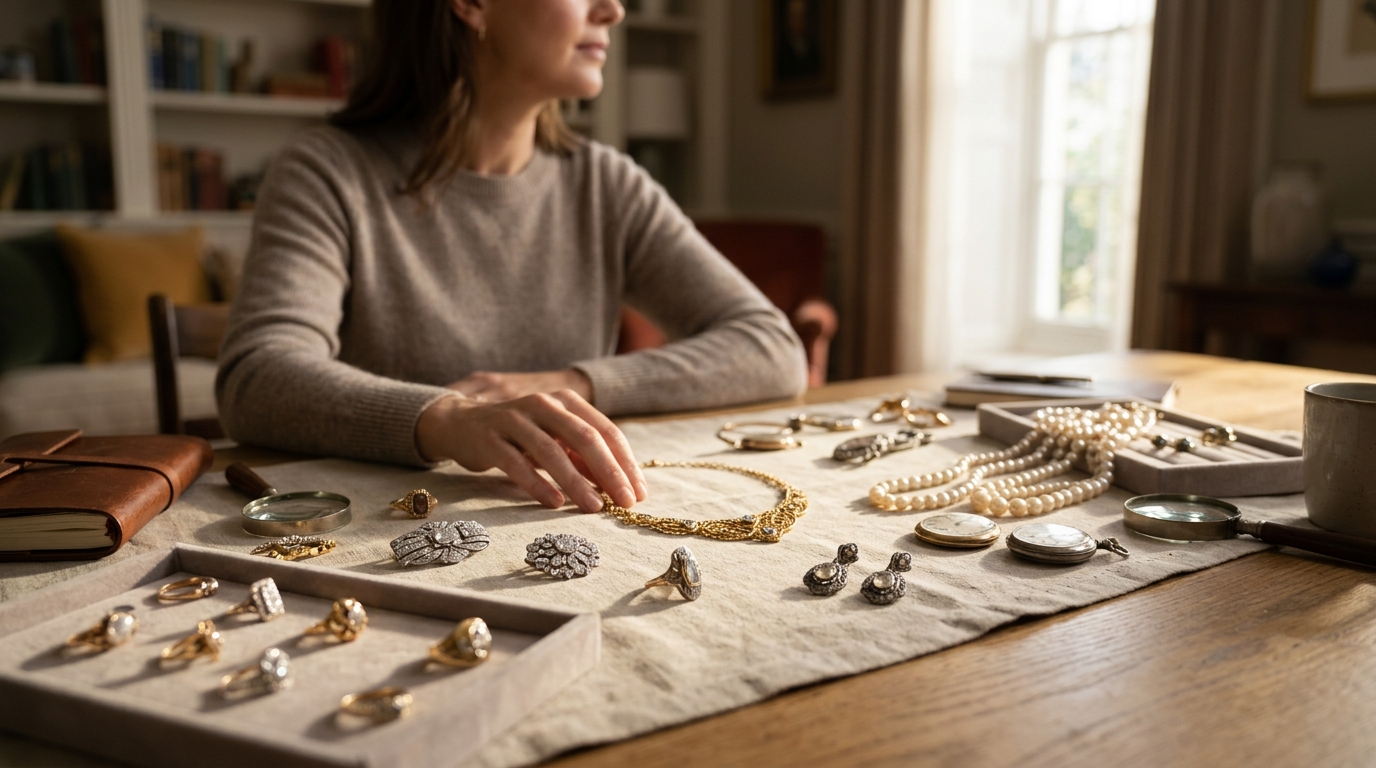
Deciding to sell estate jewelry can feel overwhelming, especially when sentimental value clouds your judgment. Whether you inherited a collection after a loved one's passing or you are simply downsizing, knowing what to look for before you sell is the key to getting a fair price. Estate jewelry is any previously owned jewelry, regardless of its age. From gold rings and diamond brooches to designer watches and vintage necklaces, every piece carries unique factors that determine its worth. This guide walks you through exactly what to evaluate, where to sell, and how to protect yourself in Palm Beach County and beyond.
Understand What Estate Jewelry Actually Is
Estate jewelry is any piece of jewelry that was previously owned by someone else. It does not need to be antique or vintage to qualify. A five-year-old Tiffany ring purchased from an estate sale counts just as much as a Victorian-era brooch.
The distinction matters because estate pieces often carry value beyond their raw materials. A signed designer bracelet from the 1920s, for example, can be worth significantly more than its gold weight alone. Designer names, historical periods, and craftsmanship all contribute to market value. Before selling anything from a collection, take a moment to understand what category each piece falls into.
Check Hallmarks and Markings First
One of the first things you should do is examine each piece for stamps and hallmarks. Markings like "14K," "750," "925," or "PT950" indicate the purity of the metal. Sterling silver items often carry a "925" or "sterling" stamp. These markings help establish a baseline value even before a professional looks at the piece.
Designer Marks Add Significant Value
Look for maker's marks from brands like Cartier, Tiffany & Co., David Yurman, or Van Cleef & Arpels. Designer marks can dramatically increase what a buyer will pay. If you find branded packaging or original boxes, keep them with the jewelry. A piece sold in its original Cartier or Tiffany box commands a higher price than the same item without one.
Document Everything
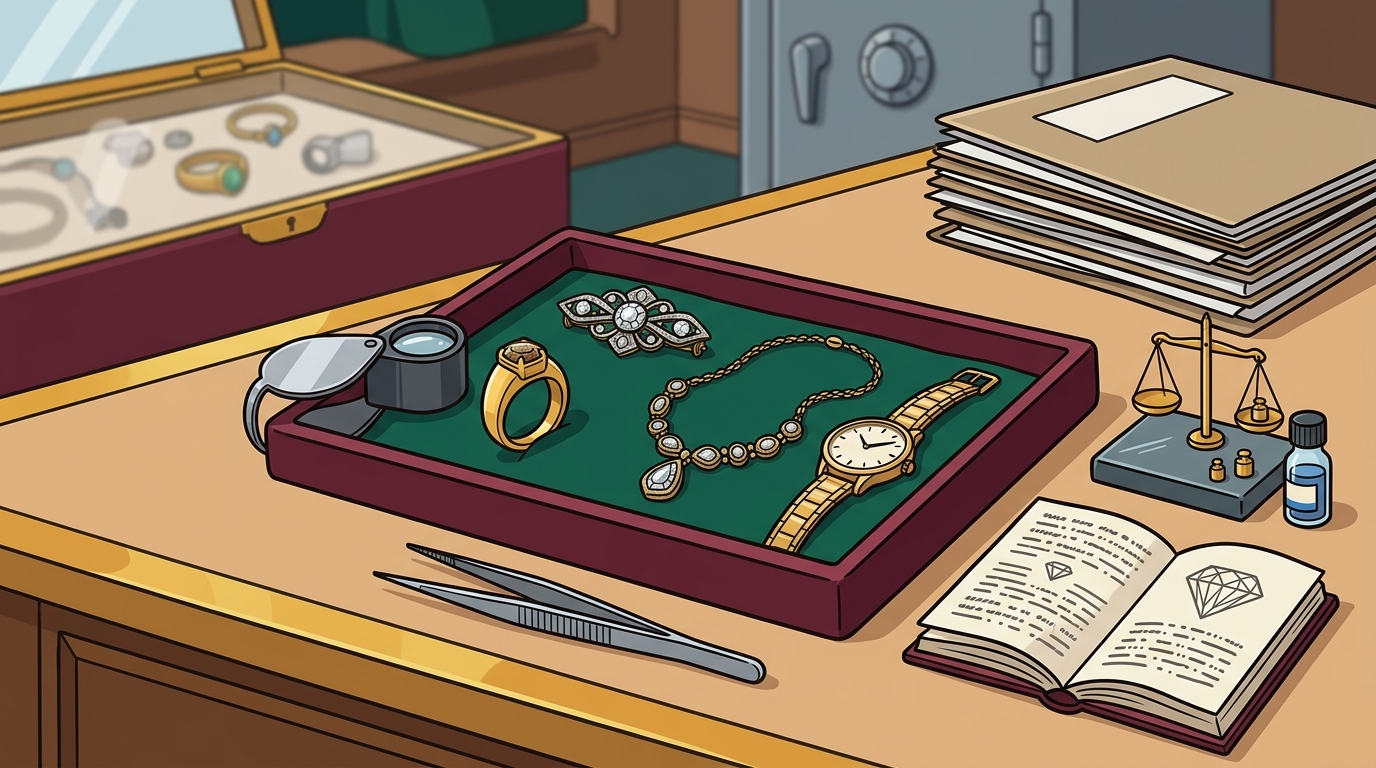
Photograph each piece from multiple angles, including close-ups of any markings. Record metal type, stone types, approximate size, and overall condition. This documentation protects you legally and financially if any disputes arise during the selling process.
Get a Professional Appraisal
Family stories about a piece's value do not always match reality. The stones in a ring may not even be genuine diamonds. To get a correct assessment of quality and authenticity, have a qualified appraiser evaluate each piece before you sell.
Get Multiple Opinions
Experts recommend taking your jewelry to two or three dealers for estimates. This gives you a balanced perspective and prevents any single buyer from undervaluing your items. You can also request a Gemological Institute of America (GIA) grading report for precious gemstones, which acts as a verified record of a stone's characteristics.
Understand Appraisal vs. Resale Value
Appraisal value is the estimated replacement cost, typically used for insurance purposes. Resale value is what a buyer will actually pay, which is almost always lower. Keep realistic expectations: you will rarely receive full retail price for estate pieces.
Evaluate Condition and Completeness
The determining factors for estate jewelry value are style, condition, and intrinsic worth. A chipped gemstone or a broken clasp reduces value quickly. However, aggressive cleaning can also cause damage. Avoid ultrasonic cleaners or harsh chemical solutions on antique pieces. A gentle wipe with a soft cloth is sufficient.
| Factor | Impact on Value | What to Do |
|---|---|---|
| Metal purity (hallmarks) | Establishes baseline melt value | Check for stamps like 14K, 18K, 925 |
| Gemstone quality | Can account for up to 99% of value | Get GIA grading report |
| Designer/brand name | Significantly increases price | Look for maker's marks and original packaging |
| Condition | Chips and scratches lower value | Handle carefully; avoid harsh cleaning |
| Completeness of sets | Matched sets sell for more | Keep earrings, necklaces, bracelets together |
| Market demand/trends | Trendy styles fetch higher prices | Research current jewelry trends |
Matching sets of earrings, necklaces, and bracelets from the same designer or collection are worth more together than sold individually. Always keep sets intact when presenting them to a buyer.
Understand Melt Value vs. Market Value
Melt value is what the precious metals in a piece would be worth if melted down. Market value considers the craftsmanship, brand, historical significance, and gemstones on top of the metal content. A plain gold chain may only be worth its melt value, while a signed Art Deco ring could sell for many times its metal weight.
Check daily metal prices to understand current gold and silver spot prices before visiting a buyer. This knowledge ensures you walk in informed and can spot lowball offers immediately. If your jewelry is primarily made of precious metals with little antique or collector's value, selling based on melt value to a trusted gold buyer is often the most straightforward option.
Choose the Right Buyer
Where you sell matters as much as what you sell. Here are the primary options:
Local Jewelry Buyers
A reputable local buyer offers convenience, immediate payment, and face-to-face transparency. Look for established businesses with strong reviews and industry affiliations. Avoid pawn shops, which typically pay far less than items are actually worth. In Palm Beach County, Lake Worth Gold Mine buys estate jewelry and has been voted "Best of Palm Beach County" six years in a row. Their safe, standalone store at Turnpike and Lake Worth Road provides a secure environment for evaluating your pieces.
Auction Houses
For high-value designer pieces, auction houses can deliver higher returns through competitive bidding. However, they charge seller's premiums and the process takes weeks or months. This channel works best for rare or exceptionally valuable items.
Safety First
If you consider selling to private individuals, never meet unknown buyers at your home. Always choose a safe, well-lit public location. Better yet, work with an established buyer like Lake Worth Gold Mine where transactions happen in a secure storefront.
Key Takeaways
- Estate jewelry is any previously owned jewelry regardless of age, and it often holds value beyond just its metal content.
- Always check for hallmarks, stamps, and designer marks before selling. These indicators establish baseline value.
- Get at least two or three professional appraisals to ensure you receive a fair offer.
- Keep original packaging, certificates, and matched sets together to maximize your payout.
- Understand the difference between melt value and market value so you know what to expect.
- Avoid pawn shops and instead work with a reputable, established jewelry buyer.
- Photograph and document everything before bringing pieces to a buyer for your own protection.
Frequently Asked Questions
What is estate jewelry?
Estate jewelry is any previously owned jewelry, regardless of how old it is. It can include everything from modern designer rings to antique Victorian brooches. The term simply means the piece had a prior owner.
How do I know if my estate jewelry is valuable?
Check for hallmarks indicating precious metal content, look for designer marks, and examine gemstones. Then get a professional appraisal from a certified gemologist. Getting two or three independent evaluations is recommended.
Should I clean estate jewelry before selling it?
Use only a gentle wipe with a soft cloth. Avoid ultrasonic cleaners or chemical solutions on antique pieces, as aggressive cleaning can damage patina and reduce value for collectors.
What is melt value?
Melt value is what the precious metals in a jewelry piece would be worth if the item were melted down into raw material. It is the floor price for any gold, silver, or platinum piece.
Where is the best place to sell estate jewelry in Palm Beach County?
Lake Worth Gold Mine has been voted "Best of Palm Beach County" six years running. They buy estate jewelry, gold, silver, watches, and more from their secure standalone store.
How many appraisals should I get before selling?
Experts recommend getting at least two or three independent appraisals. This helps you understand the true market value and prevents you from accepting a lowball offer.
Can I sell estate jewelry that has no gemstones?
Yes. Plain gold, silver, or platinum jewelry still holds value based on its metal content and weight. Check current metal prices to understand the baseline before visiting a buyer.
Is it OK to sell jewelry I inherited from a loved one?
Absolutely. Property passed down from a loved one should be a blessing, not a burden. Many people keep one or two sentimental pieces and sell the rest to put the value to good use.
Ready to Sell Your Estate Jewelry?
If you are in Palm Beach County and ready to find out what your estate jewelry is worth, book an appointment with Lake Worth Gold Mine today. Get a free, no-obligation evaluation from trusted experts voted the best in the county six years in a row. Walk in informed, walk out confident.