Where in Palm Beach County Can I Sell Estate Jewelry to a Licensed Dealer?
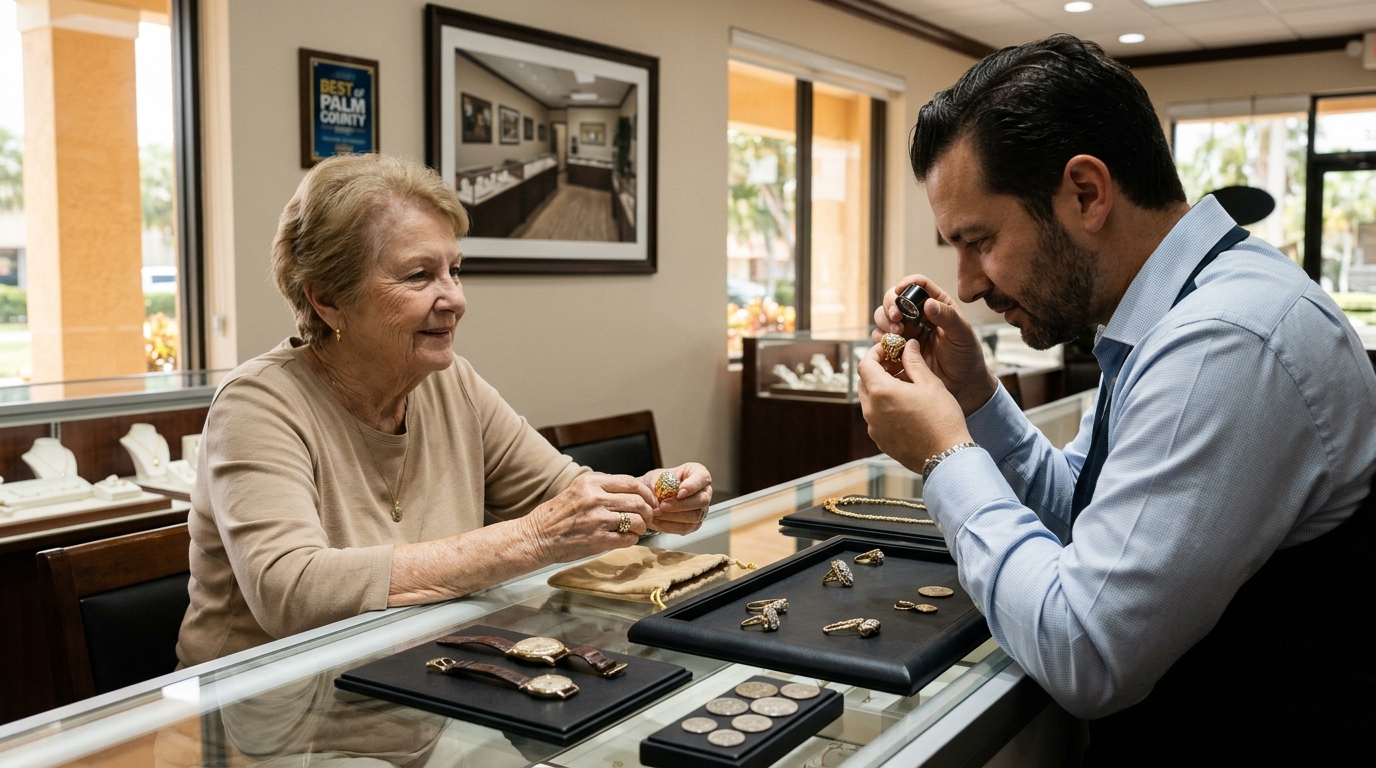
Residents of Palm Beach County can sell estate jewelry to licensed dealers such as the Lake Worth Gold Mine, which operates a secure, standalone storefront at 8100 Lake Worth Road. This guide explains how to verify dealer licensing, understand valuation methods, and navigate the local market for antique and vintage pieces. We cover the specific regulatory requirements in Florida and provide a practical roadmap for maximizing the value of your inherited or collected items.
Licensing Verification Requirements
When selling high-value items like estate jewelry, verifying a dealer's legal standing is the first critical step. In Florida, businesses that purchase second-hand goods, including jewelry, coins, and bullion, must adhere to strict state and county regulations. A licensed dealer is a business entity that has obtained the necessary permits to operate legally as a second-hand dealer or pawnbroker. This ensures that the transaction is recorded and that the dealer is accountable to local law enforcement agencies. For additional details, review the Customer Reviews Lake Worth.
Florida Second-Hand Dealer Regulations
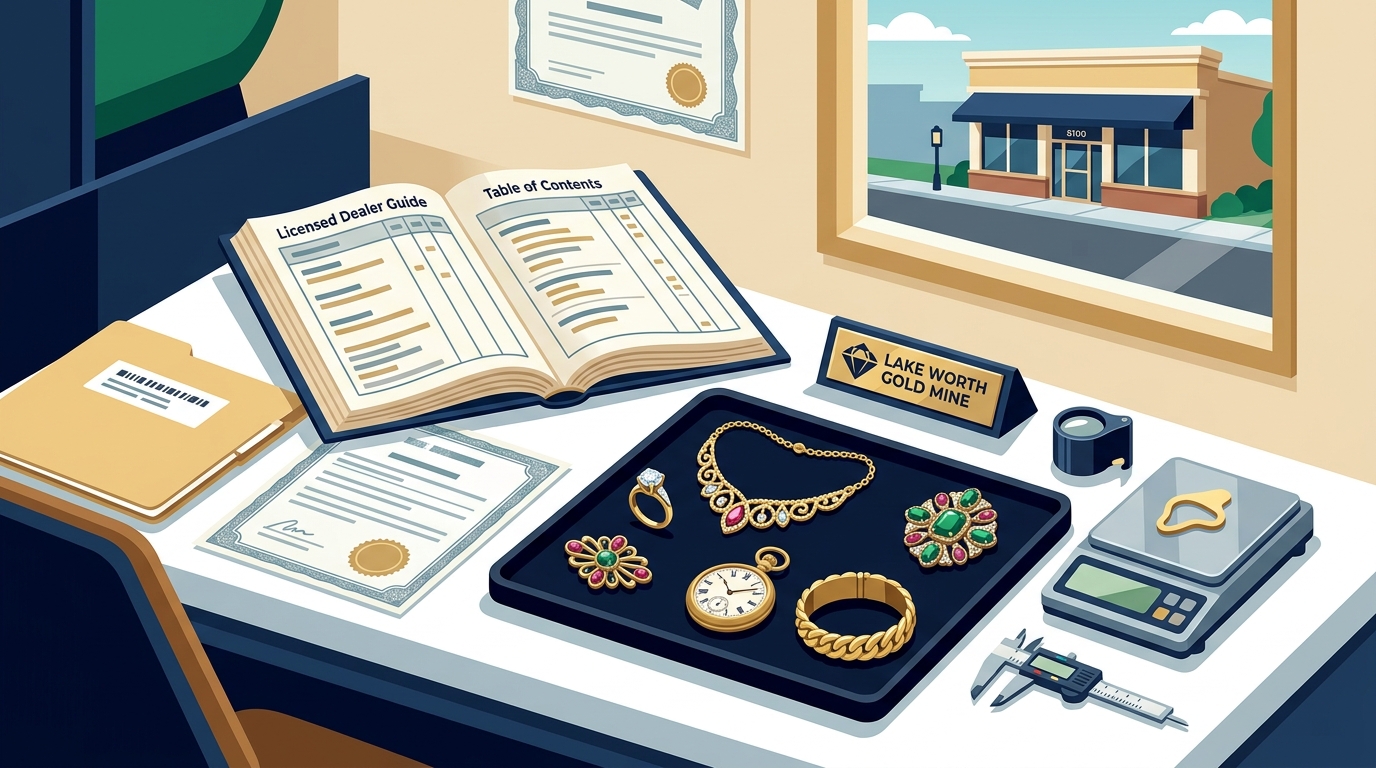
Florida law requires dealers to maintain specific licenses to handle precious metals and jewelry. The Lake Worth Gold Mine, for example, is licensed by Palm Beach County and holds a Second Hand Dealer license issued by the Palm Beach County Sheriff's Office (PBSO). This license ensures that the business complies with state laws regarding the purchase of used goods. Additionally, the business must be bonded, which provides a financial guarantee of their operations. When you visit a store, you can often see these license numbers displayed in the window or on the counter, as is the case at the Lake Worth Gold Mine, which displays its Palm Beach County license and weighing device permit.
Why Licensing Matters for Estate Jewelry
Licensing is not just a bureaucratic formality; it is a safety measure for the seller. A licensed dealer is required to record the details of the transaction, including the seller's identification and a description of the items sold. This creates a paper trail that protects both parties. If you are selling a significant collection, a licensed dealer provides a level of security and professionalism that unlicensed buyers or informal For additional details, review the Blog Lake Worth Gold.