
Gold Jewelry Valuation Myths and FAQs for Palm Beach County Sellers
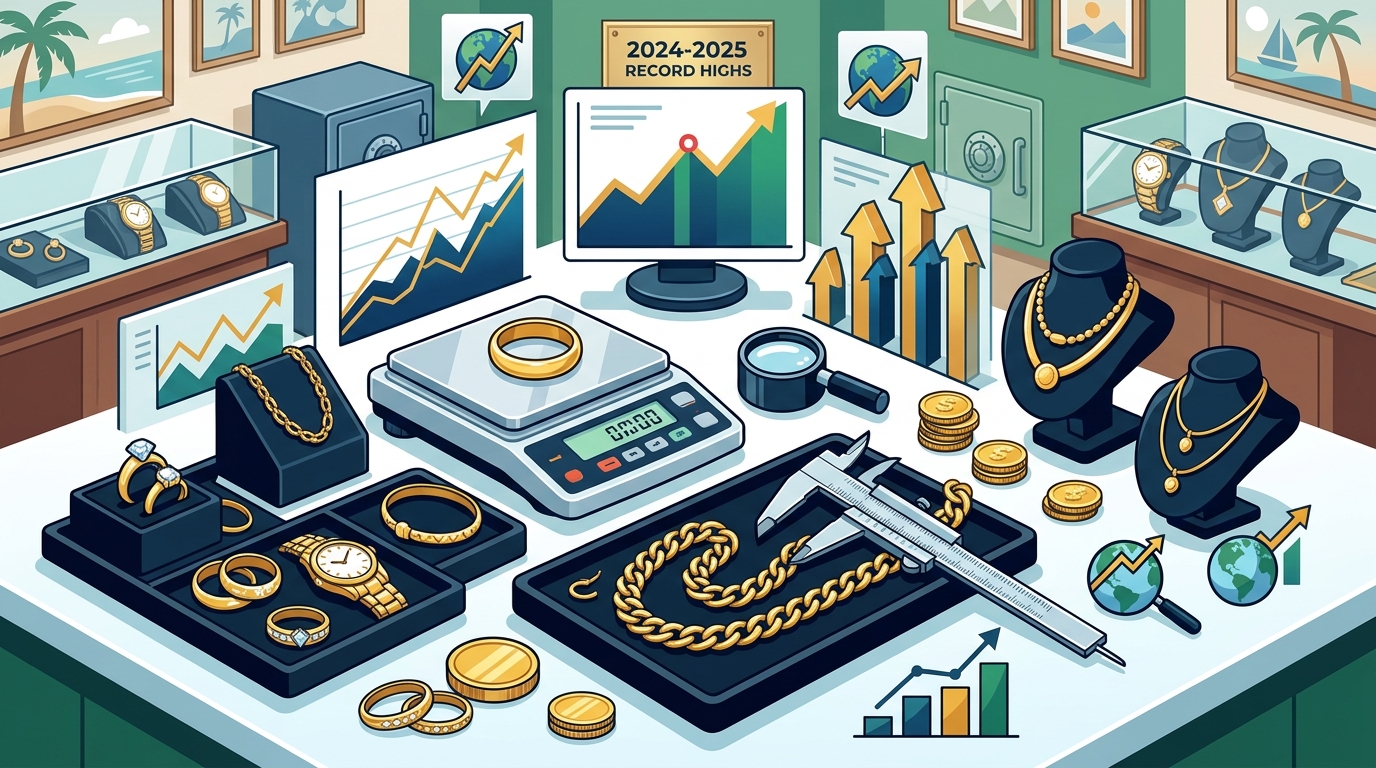
Gold prices have experienced significant volatility in recent years, with spot rates frequently fluctuating based on global economic indicators. According to historical market data from the London Bullion Market Association, gold has maintained a strong upward trajectory, reaching record highs in 2024 and continuing into 2025. This surge has led to an influx of sellers in affluent areas like Palm Beach County, many of whom are unaware of the specific factors that determine the true value of their precious metal holdings. Understanding these dynamics is crucial for maximizing returns when parting with inherited pieces, unwanted gifts, or estate assets. (Contact Us)
Myth 1: Karat Weight Equals Total Value
One of the most pervasive misconceptions among sellers is that the karat rating alone determines the payout. Karat weight indicates the purity of the gold, with 24 karat being pure gold and lower numbers indicating alloyed metals. However, the actual value is calculated based on the weight of the pure gold content, not the total weight of the item. For instance, a 10-gram piece of 14-karat gold contains less pure gold than a 10-gram piece of 18-karat gold. This distinction is critical for sellers in Lake Worth and surrounding Palm Beach County communities who may be holding onto lower-purity items thinking they have less value than they actually do.
Understanding the difference between gross weight and net gold weight is the first step in accurate valuation. Gold buyers use precise scales and acid tests or electronic testers to determine the exact purity. This process ensures that sellers are paid fairly for the actual precious metal content. Ignoring this nuance can lead to significant underpayment, especially for items that appear heavy but are largely composed of base metals.
Myth 2: All Gold Buyers Offer Spot Price
Another common myth is that every buyer will offer the current spot price for gold. The spot price is the real-time market value of gold per troy ounce. However, reputable buyers rarely pay 100% of the spot price. They must account for refining costs, operational overhead, and profit margins. According to industry standards reported by the National Gold and Silver Association, buyers typically offer between 80% and 95% of the melt value, depending on the purity and quantity of the gold.
Shoppers in Palm Beach County should be wary of buyers claiming to pay "100% of spot." Such offers are often marketing gimmicks that hide fees or undervalue the gold in other ways. Transparent buyers will clearly explain their pricing model, showing how they derive the final offer from the current spot price minus refining fees. This transparency builds trust and ensures that sellers receive a competitive and honest valuation.
Myth 3: Appraisals Dictate Sale Price
Sellers often believe that a professional appraisal of their jewelry sets the sale price. This is a critical misunderstanding. Appraisals are typically based on replacement cost, which includes the value of craftsmanship, brand name, and retail markup. In contrast, selling gold for scrap or melt value focuses solely on the intrinsic value of the metal. For example, a diamond necklace appraised at $5,000 for replacement might only yield $500 in gold value if the diamonds are removed or not included in the sale.
It is essential to distinguish between retail value and melt value. If you are selling for the gold content, the appraisal is irrelevant. However, if the jewelry has significant gemstone value or is a vintage piece, selling it as scrap could result in a massive loss of potential value. Lake Worth Gold Mine specializes in evaluating both aspects, ensuring that sellers understand whether their item is better suited for melt or resale. For more information on gemstone valuation, you can explore resources from the Gemological Institute of America.
Myth 4: Condition Irrelevant for Scrap Gold
2026Many sellers assume that broken or damaged jewelry has no value. This is false. Broken gold retains its intrinsic metal value regardless of its cosmetic condition. In fact, damaged items are often easier to process for melt value because they do not require the same level of restoration. However, the structural integrity can sometimes affect the ease of processing. For instance, gold-plated items may have a thin layer of gold over a base metal core, which requires careful testing to avoid overestimating the value.
Understanding the difference between solid gold and gold-plated items is crucial. Solid gold items will show wear patterns consistent with the metal throughout, while plated items may reveal a different metal color at high-friction points. This distinction impacts the final offer significantly. Buyers in Palm Beach County should be honest about the condition of their items to receive an accurate quote. Hiding damage can lead to renegotiated offers after inspection, which is frustrating for all parties involved.
Comparing Local Buyers vs. Online Services
When deciding where to sell gold in Palm Beach County, sellers often choose between local buyers and online mail-in services. Each option has distinct advantages and disadvantages. Local buyers offer immediate payment and the ability to inspect items in person. Online services may offer competitive rates but require shipping and waiting periods. The table below summarizes the key differences.
| Feature | Local Buyers (e.g., Lake Worth Gold Mine) | Online Mail-In Services |
|---|---|---|
| Payment Speed | Immediate upon agreement | Days to weeks after receipt |
| Inspection | Transparent, in-person | Remote, potential for disputes |
| Security | No shipping risk | Shipping insurance required |
| Convenience | Requires travel to location | Can be done from home |
For high-value items, local inspection is often preferred to ensure accurate valuation and immediate transaction security. According to data from the Better Business Bureau, local transactions generally result in higher customer satisfaction due to the transparency of the process. Sellers in Lake Worth can benefit from the convenience of walking into a local shop and receiving a fair offer on the spot.
Key Takeaways for Palm Beach Sellers
- Karat vs. Weight: Always understand the difference between purity and total weight to calculate expected value accurately.
- Spot Price Reality: Expect offers between 80% and 95% of spot price, not 100%, due to refining costs.
- Appraisal Limits: Appraisals reflect replacement cost, not melt value, and should not be used as a selling guide for scrap gold.
- Condition Matters: Broken gold is still valuable, but distinguishing between solid and plated items is critical for accurate pricing.
- Local Advantage: Local buyers in Palm Beach County offer immediate payment and transparent inspections, reducing risk.
- Multiple Quotes: Always seek quotes from at least two reputable buyers to ensure competitive pricing.
- Documentation: Keep records of your transactions for tax purposes, as gold sales may have reporting requirements.
Frequently Asked Questions
How is the value of my gold jewelry calculated?
The value is calculated by weighing the item, testing its purity (karat), and multiplying the net weight of pure gold by the current spot price, minus refining fees. This process ensures you are paid for the actual metal content.
Do you buy gold-plated items?
We evaluate gold-plated items to determine the value of the base metal and the thin layer of gold. However, the payout will be significantly lower than for solid gold items. It is important to be honest about the item's composition.
What identification do I need to sell gold?
In Florida, sellers must provide a valid government-issued photo ID. This is a legal requirement to prevent the sale of stolen goods and to comply with local regulations. Ensure your ID is current and not expired.
Can I sell broken or damaged gold?
Yes, broken gold retains its intrinsic value. In fact, it is often easier to process for melt value. The cosmetic condition does not affect the metal's purity or weight.
How long does the selling process take?
The process typically takes 30 to 60 minutes. This includes weighing, testing, and discussing the offer. Once you accept the offer, payment is issued immediately via cash, check, or wire transfer.
Do you offer free appraisals?
We provide free valuations for the purpose of selling gold. However, formal written appraisals for insurance purposes are a separate service and may incur a fee. We recommend consulting with a certified appraiser for insurance needs.
What if I have jewelry with gemstones?
We can evaluate the gold content separately from the gemstones. If the gemstones have significant value, we may advise on alternative selling methods to maximize your return. For gemstone insights, refer to the Gemological Institute of America.
Contact Lake Worth Gold Mine
Ready to get a fair and transparent valuation for your gold jewelry? Lake Worth Gold Mine is committed to providing honest, competitive offers to sellers in Palm Beach County and beyond. Visit our services page to learn more about our valuation process. Schedule an appointment today by visiting our contact page or calling our office directly. We look forward to helping you unlock the true value of your precious metal holdings.