
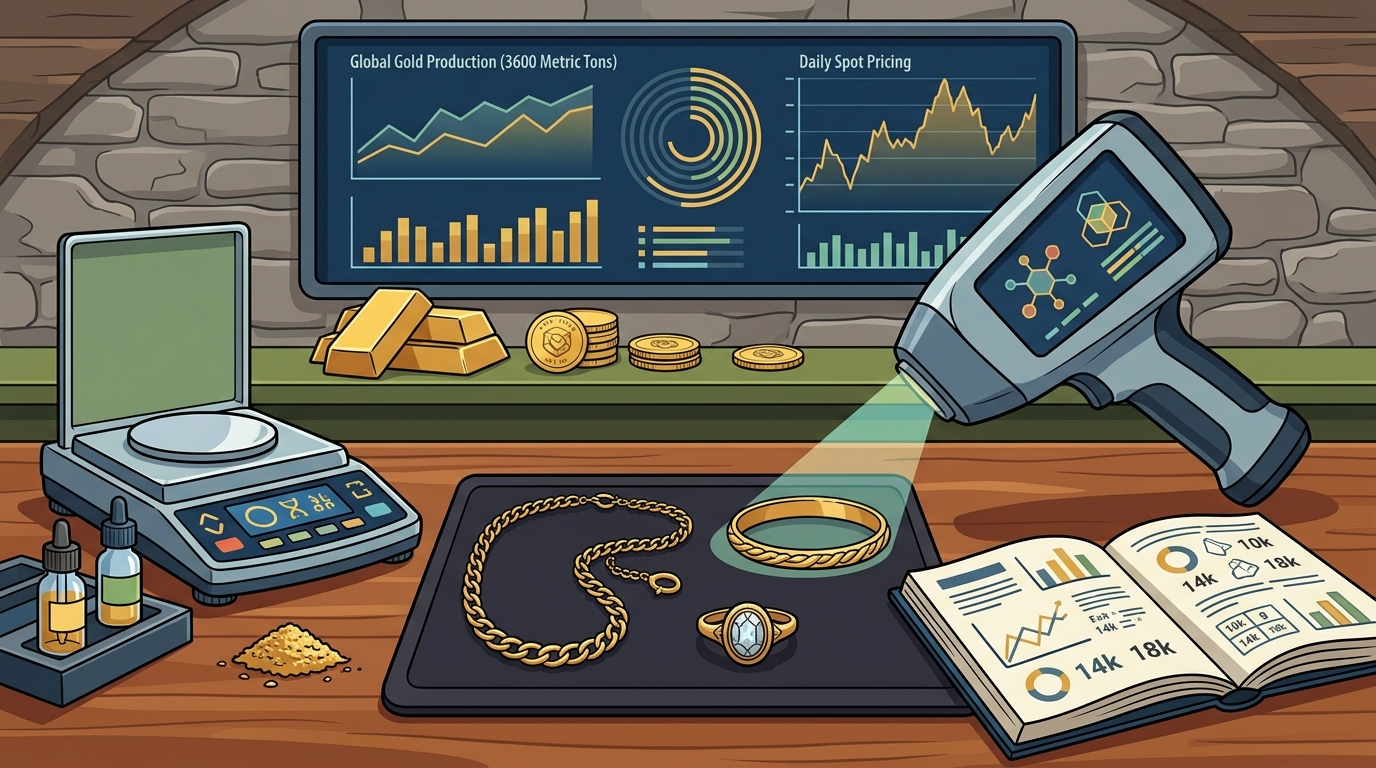
Understanding how buyers calculate the worth of your precious metals requires a clear grasp of market mechanics and material composition. According to the United States Geological Survey, global gold production reached approximately 3,600 metric tons in 2023, establishing a baseline for current spot pricing. Global production data directly influences the daily fluctuation of raw material costs. Buyers then apply specific formulas to your physical items, factoring in purity, weight, and current market demand. This process ensures you receive a fair transaction when visiting a professional evaluation center. The following breakdown explains exactly how these calculations occur.
Understanding Karat Weight Calculation
Defining Karat Standards
Karat weight calculation is the foundational step in determining your jewelry worth. This metric measures the purity of the metal by dividing the actual gold content by twenty-four parts. Professional buyers always verify the stamped hallmark on your pieces before proceeding. A twenty-four karat piece contains pure gold, while lower numbers indicate mixed alloys. This distinction directly impacts the final payout amount.
Weight Measurement Protocols
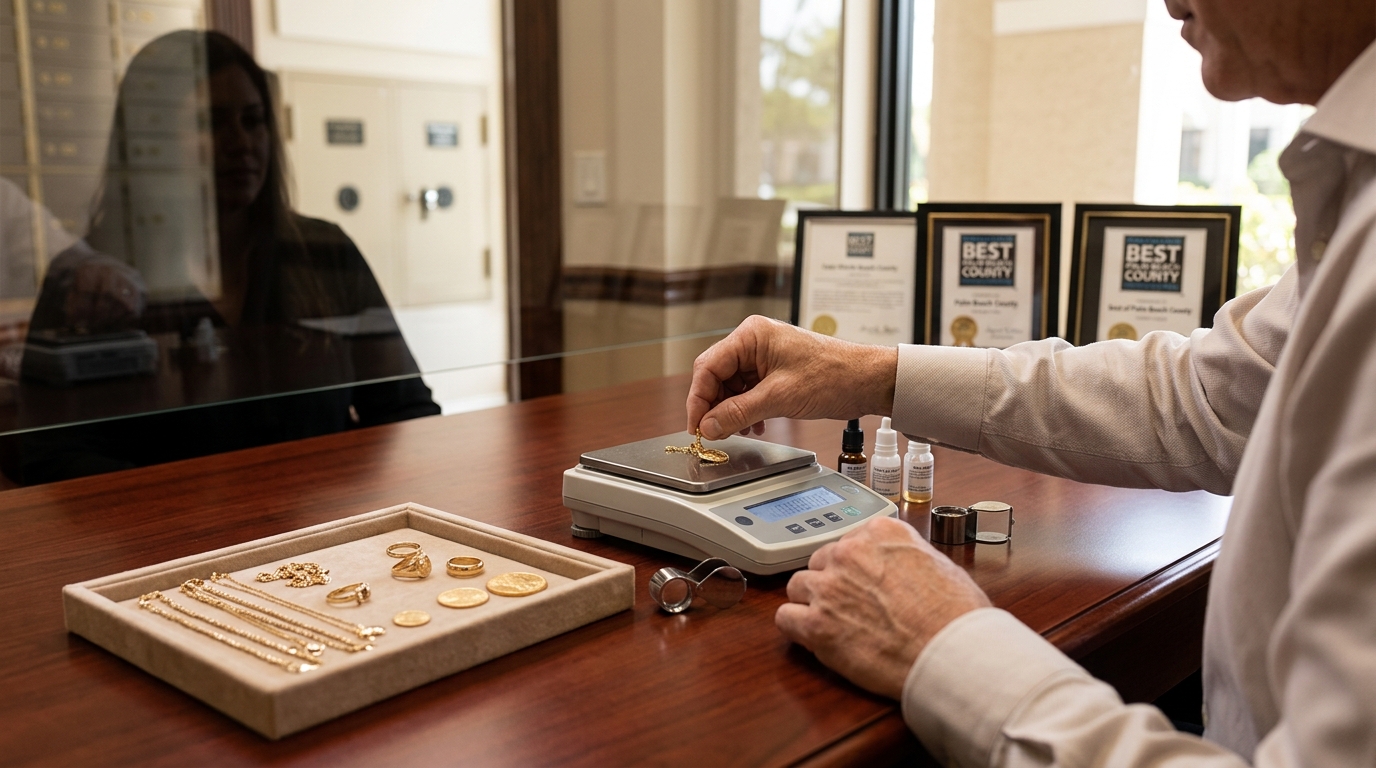
Accurate weighing requires precision digital scales calibrated to the gram. Buyers convert troy ounces to grams to match international trading standards. The total carat weight of all stones is strictly excluded from the metal calculation. This separation ensures you are paid strictly for the precious metal content. Daily metal prices are then applied to this exact gram weight.
Spot Price Mechanics and Market Fluctuations
Market Demand Drivers
Spot price mechanics refer to the real-time trading value of raw bullion on global exchanges. London Bullion Market data shows that institutional trading volume heavily influences these daily rates. Buyers purchase your jewelry at a percentage below this live rate to cover refining costs and operational overhead. Understanding this spread helps you time your sales strategically. Market volatility can create favorable windows for sellers.
Regional Pricing Adjustments
Local buyers adjust their offers based on regional supply chain logistics. Shipping costs and refining fees are deducted from the base spot rate. This adjustment ensures the business remains profitable while offering competitive payouts. You should always compare multiple local shops to secure the best rate. Established local shops often maintain higher payout ratios to retain loyal customers.
The Jewelry Appraisal Process
Visual Inspection Standards
The jewelry appraisal process begins with a thorough visual inspection of your items. Buyers check for missing stones, broken clasps, or excessive wear that reduces resale value. This assessment determines whether the piece will be melted down or resold as vintage inventory. Customer feedback consistently highlights the transparency of this inspection phase. Buyers document every detail to prevent disputes later.
Chemical Testing Procedures
Chemical testing procedures verify the actual metal composition inside the piece. Buyers use acid tests or electronic testers to confirm the stated karat rating. This step prevents fraud and ensures accurate payout calculations. The results directly dictate the final offer amount. Transparent testing protocols build long-term trust with sellers.
Material Purity Standards and Alloys
Alloy Composition Impact
Material purity standards dictate how much actual gold exists within your jewelry. Alloys like copper, silver, or nickel are added to increase durability and alter color. These base metals have significantly lower market values than pure gold. Buyers subtract the weight of these non-precious components from your total payout. This calculation ensures you are compensated strictly for the gold content.
Platinum and Silver Inclusions
Platinum and silver inclusions can sometimes increase the overall value of a piece. Buyers will weigh these separate components and apply their respective spot rates. This additive approach maximizes your return on mixed-metal items. You should always disclose all metal types during your initial consultation. Federal Reserve reports indicate that mixed-metal transactions require precise separation to avoid valuation errors.
Buyer Evaluation Methods and Pricing Models
Direct Purchase vs. Consignment
Buyer evaluation methods typically fall into two distinct categories: direct purchase or consignment. Direct purchase provides immediate cash based on current metal weight and purity. Consignment programs hold your item until a retail buyer purchases it at a higher markup. This model yields greater profits but requires a longer waiting period. You should choose the option that aligns with your financial timeline.
Refining and Processing Fees
Refining and processing fees cover the industrial costs of melting and purifying your metals. These fees are deducted from your final payout to maintain business viability. Reputable buyers disclose these charges upfront to prevent hidden costs. You should always request a detailed breakdown before signing any paperwork. Industry standard practices require full transparency regarding all deductions.
Maximizing Your Return on Precious Metals
Documentation and Provenance
Documentation and provenance can significantly increase the value of vintage or designer pieces. Original receipts, brand tags, or historical certificates prove authenticity and rarity. Buyers will pay a premium for items with verifiable origins. You should gather all available paperwork before visiting a local shop. This preparation streamlines the entire transaction process.
Timing Your Sale Strategically
Timing your sale strategically allows you to capitalize on favorable market conditions. Buyers monitor global economic indicators to predict short-term price movements. Selling during periods of high inflation often yields better results. You should track daily rates and contact your preferred buyer when conditions align. Expert guidance ensures you never miss a favorable market window.
Valuation Comparison Matrix
| Metal Type | Purity Standard | Primary Valuation Factor | Buyer Processing Method |
|---|---|---|---|
| 24 Karat Gold | 99.9% Pure | Spot Price Multiplier | Direct Melting |
| 18 Karat Gold | 75.0% Pure | Weighted Alloy Deduction | Chemical Verification |
| Platinum | 95.0% Pure | High Density Weight | Separate Refining |
| Silver | 92.5% Pure | Market Volatility | Bulk Processing |
Key Takeaways
- Lake Worth Gold Mine has operated continuously for fifteen years, establishing deep regional expertise.
- The business was voted Best of Palm Beach County five consecutive years, reflecting consistent customer satisfaction.
- Professional buyers utilize calibrated digital scales to measure exact gram weight before applying spot rates.
- Karat weight calculation strictly isolates pure gold content from mixed alloy components.
- Daily metal prices fluctuate based on global institutional trading volume and economic indicators.
- Transparent testing protocols and upfront fee disclosures are standard industry requirements.
- Local shops often maintain higher payout ratios to secure long-term client relationships.
Frequently Asked Questions
How do buyers verify the actual gold content in my jewelry?
Buyers verify actual gold content through a combination of hallmark inspection, precise digital weighing, and electronic or acid testing. This multi-step process ensures the stamped purity matches the physical composition. You will receive a detailed breakdown of these findings before any agreement is finalized.
What happens to my jewelry after I sell it to a local buyer?
Your jewelry is either melted down for raw material refining or prepared for resale as vintage inventory. Buyers sort each piece based on its condition, brand recognition, and current market demand. This sorting process determines whether your item enters the refining stream or the retail showcase.
Can I sell broken or damaged gold jewelry?
You can absolutely sell broken or damaged gold jewelry because buyers calculate value strictly on metal weight and purity. Missing stones or broken clasps do not reduce the payout for the actual gold content. You should bring all fragments to your appointment to maximize your total return.
How often do spot prices change and when is the best time to sell?
Spot prices change continuously during active trading hours on global financial exchanges. The best time to sell aligns with periods of high economic uncertainty or rising inflation rates. Tracking daily metal prices allows you to request quotes when market conditions favor sellers.
Do buyers charge any hidden fees during the evaluation process?
Reputable buyers never charge hidden fees during the evaluation process because transparency is required by industry standards. All refining costs and processing deductions are disclosed upfront before you accept an offer. You should always request a written breakdown of all potential deductions.
What documents should I bring to my initial consultation?
You should bring any original receipts, brand tags, or historical certificates that prove the authenticity of your items. These documents establish provenance and can significantly increase the value of vintage or designer pieces. Bringing your government-issued identification also speeds up the transaction process.
How does the karat rating affect my final payout amount?
The karat rating directly affects your final payout amount by determining the exact percentage of pure gold in your items. A twenty-four karat piece contains pure gold and commands the highest multiplier. Lower karat ratings contain mixed alloys that reduce the overall metal value.
Is there a minimum weight requirement to sell gold jewelry?
Most professional buyers do not enforce a strict minimum weight requirement to sell gold jewelry. You can bring small fragments, broken chains, or single earrings to receive a fair evaluation. Buyers will simply weigh your total collection and apply the current spot rate to your combined gram weight.
Get Your Free Evaluation Today
Ready to discover the true worth of your precious metals? Visit the Lake Worth Gold Mine showroom to receive a complimentary, no-obligation assessment from our certified specialists. Our team combines fifteen years of regional expertise with transparent testing protocols to ensure you receive maximum value. Schedule your visit today and experience the difference that professional expertise makes. Bring your gold, silver, diamonds, watches, and collectibles to our Palm Beach County location. We look forward to helping you unlock the full potential of your assets.