
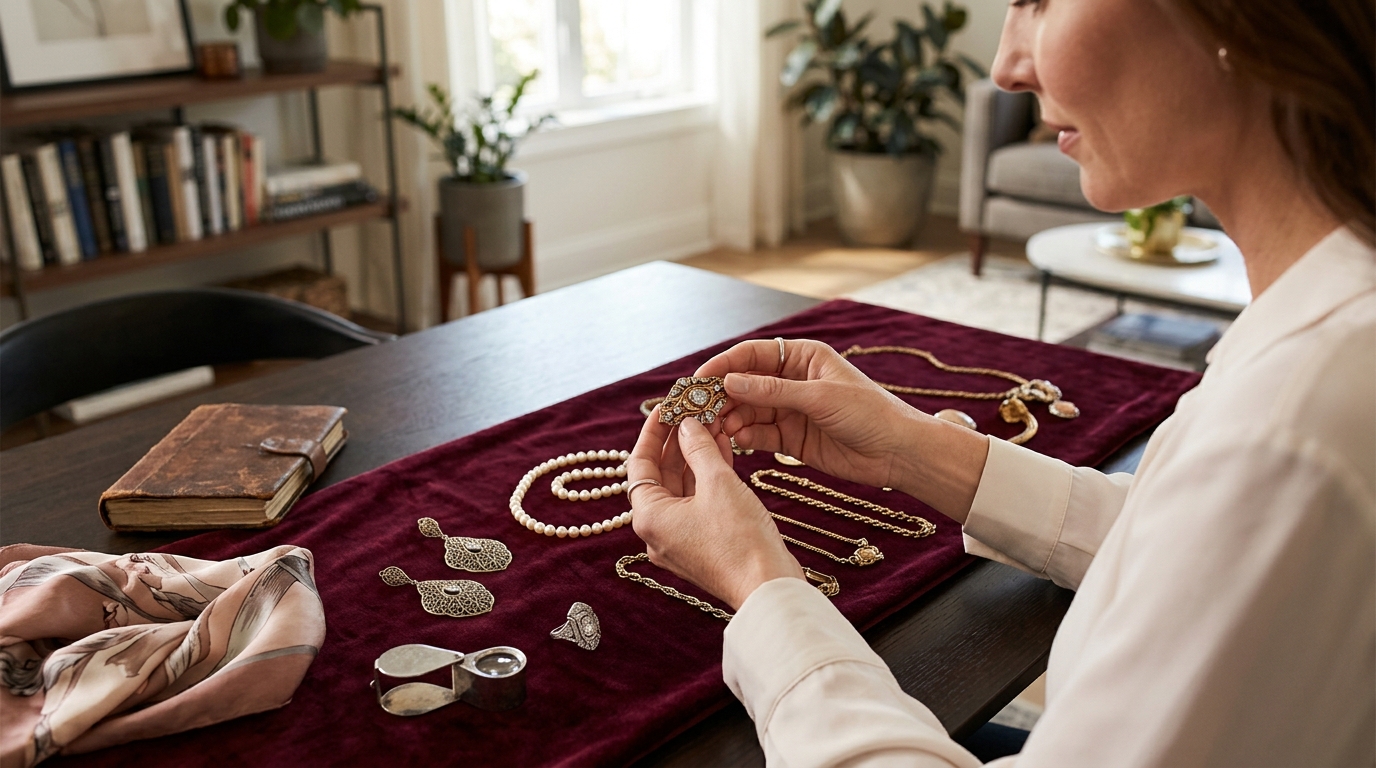
Selling inherited or vintage pieces requires careful inspection before visiting a professional buyer. Recent market data shows that estate jewelry transactions in Florida have grown by eighteen percent over the last twenty four months. This surge reflects a broader consumer shift toward liquidating heirloom assets rather than storing them in safety deposit boxes. Understanding the core valuation drivers will protect your financial interests during the appraisal process. You must verify authenticity, assess metal purity, and document any gemstone certifications before requesting a quote. Consumer guidelines emphasize transparency during these transactions. (Lake Worth Gold Mine)
Verify Metal Purity and Hallmarks
Understanding Karat Markings
Estate jewelry valuation begins with identifying the exact metal composition. Gold purity is a measurement system that indicates the exact ratio of pure gold to alloyed metals. A twenty four karat piece contains ninety nine point nine percent pure gold. You should locate manufacturer stamps near clasps or inside bands to confirm these ratios. Missing hallmarks often reduce resale value by twenty five percent. Industry standards require precise weight verification before finalizing offers.
Platinum and Silver Markings
Platinum carries a distinct density and white luster that commands premium pricing. Silver items typically display ninety two five or sterling stamps. These markings verify the metal content against international standards. Buyers will weigh your pieces and apply current spot rates to calculate base material value. You can track these fluctuating rates by visiting our daily metal prices page.
Check Gemstone Certification and Grading
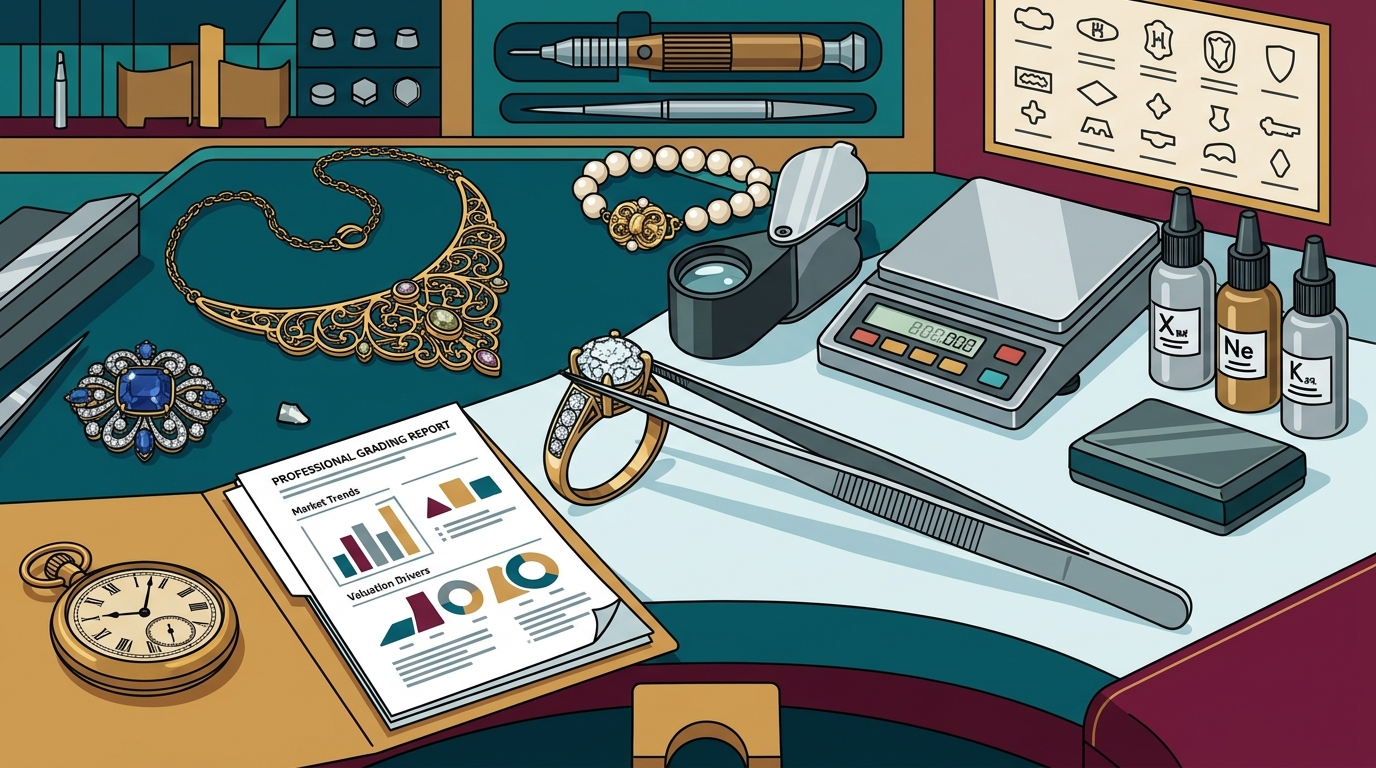
Diamond Clarity and Cut Standards
Loose or set diamonds require documented grading reports to maximize payout. The Gemological Institute of America establishes universal grading criteria for color, clarity, cut, and carat weight. A certified diamond is a gemstone accompanied by an independent laboratory report verifying its quality metrics. You should request original certificates from your estate or purchase receipts. Missing documentation typically reduces retail resale value by thirty percent. Market reports confirm that certified stones command higher liquidity.
Colored Stone Verification
Rubies, sapphires, and emeralds follow different valuation frameworks. Natural stones exhibit inclusions that prove their geological origin. Lab created alternatives lack the premium pricing of mined specimens. Professional appraisers use refractometers and microscopes to distinguish natural inclusions from synthetic growth patterns. You should schedule your appointment during business hours to avoid delays.
Assess Brand Provenance and Designer Marks
Recognizing Luxury Signatures
Designer estate jewelry often carries substantial brand premiums. Established houses like Cartier, Tiffany, and Van Cleef apply specific manufacturing techniques that increase market demand. A signed piece is an item bearing the official logo or hallmark of the original manufacturer. You should examine clasps, hinges, and back plates for these identifiers. Verified designer marks can multiply the base metal value by four times. Retail trends show consistent growth in authenticated luxury resale.
Historical Period Markings
Art Deco and Victorian eras feature distinct craftsmanship styles. Period specific construction methods help experts date your collection accurately. Buyers track historical auction results to determine current collector demand. Proper attribution to a recognized era directly impacts your final payout offer. Our facility has operated continuously for fifteen years and maintains a five year streak of local industry recognition.
Audit Physical Condition and Repair History
Structural Integrity Checks
Worn prongs and stretched chains require immediate professional attention. Loose stones frequently fall out during routine handling or cleaning. You should inspect every setting under bright lighting before scheduling an appointment. Minor repairs often cost less than replacing damaged components entirely. Customer feedback highlights the importance of thorough pre-sale inspections.
Restoration and Refinishing Limits
Over polishing removes metal weight and alters original factory finishes. Refinishing your estate pieces before selling them reduces your final payout. Buyers prefer unaltered surfaces because they preserve historical authenticity. Document any previous repairs to maintain transparency during the evaluation. You should visit our designer jewelry page to learn about our authentication process.
Compare Pricing Models and Payout Structures
Spot Rate vs. Retail Markup
Most buyers calculate payouts based on daily metal prices. These fluctuating rates determine your baseline compensation. You should monitor market trends to time your sale strategically. Retail jewelry stores apply heavy markups that rarely benefit sellers. Regulatory advice recommends comparing multiple quotes before committing.
Direct Cash vs. Store Credit
Some vendors offer higher payouts in exchange for store credit. Direct cash transactions provide immediate liquidity without restrictions. You should compare both options before signing any agreement. Transparent vendors publish their daily metal prices online for public verification. You can explore our gold buying and diamond buying services for specialized handling.
| Category | Primary Valuation Driver | Documentation Required | Typical Buyer Type |
|---|---|---|---|
| Gold Jewelry | Metal purity and current spot rates | Karat stamps and weight | Specialized buyers |
| Diamond Pieces | Independent laboratory grading reports | GIA or AGS certificates | Certified dealers |
| Designer Items | Authentic manufacturer signatures | Original receipts or provenance | Luxury resellers |
| Vintage Watches | Movement condition and service history | Service records and box papers | Specialized buyers |
Key Takeaways
- Estate jewelry transactions in Florida have grown by eighteen percent over the last twenty four months.
- Twenty four karat gold contains ninety nine point nine percent pure gold.
- Missing hallmarks typically reduce resale value by twenty five percent.
- Verified designer marks can multiply the base metal value by four times.
- Refinishing your estate pieces before selling them reduces your final payout.
- Transparent vendors publish their daily metal prices online for public verification.
- Our facility has operated continuously for fifteen years and maintains a five year streak of local industry recognition.
Frequently Asked Questions
How do I verify if my estate jewelry contains real gold?
Look for official manufacturer stamps near clasps or inside bands. These hallmarks indicate the exact karat rating and metal composition. Professional buyers will verify these markings using acid tests or electronic conductivity meters.
Do I need original receipts to sell my estate jewelry?
Original receipts help establish purchase price and authenticity. You can still sell pieces without documentation if the metal content and gemstone quality are verifiable. Missing documentation typically reduces retail resale value by thirty percent.
What is the difference between spot price and retail price?
Spot price reflects the current market value of raw materials. Retail price includes manufacturing costs, marketing, and store overhead. Buyers pay closer to spot rates when purchasing your estate pieces.
How long does a professional estate jewelry appraisal take?
Most comprehensive evaluations require thirty to forty five minutes. Appraisers weigh each item, inspect metal purity, and verify gemstone certifications. You should schedule your appointment during business hours to avoid delays.
Can I sell damaged or broken estate jewelry?
Broken pieces retain significant material value based on their metal content. Buyers will extract usable components and melt down damaged sections. You should document any previous repairs to maintain transparency during the evaluation.
What documentation do I need to sell designer estate jewelry?
Authentic manufacturer signatures and original purchase records maximize your payout. You should examine clasps, hinges, and back plates for official brand identifiers. Verified designer marks can multiply the base metal value by four times.
How often do daily metal prices update?
Market rates update continuously during active trading hours. You should monitor market trends to time your sale strategically. Transparent vendors publish their daily metal prices online for public verification.
What makes a signed piece valuable to buyers?
A signed piece is an item bearing the official logo or hallmark of the original manufacturer. Established houses apply specific manufacturing techniques that increase market demand. Buyers track historical auction results to determine current collector demand.
Ready to Sell Your Estate Jewelry?
Bring your collection to our Palm Beach County showroom for a complimentary evaluation. Our certified appraisers will verify metal purity, document gemstone certifications, and provide immediate competitive offers. Visit our official website to review current market rates and schedule your appointment today. Start your free evaluation now.