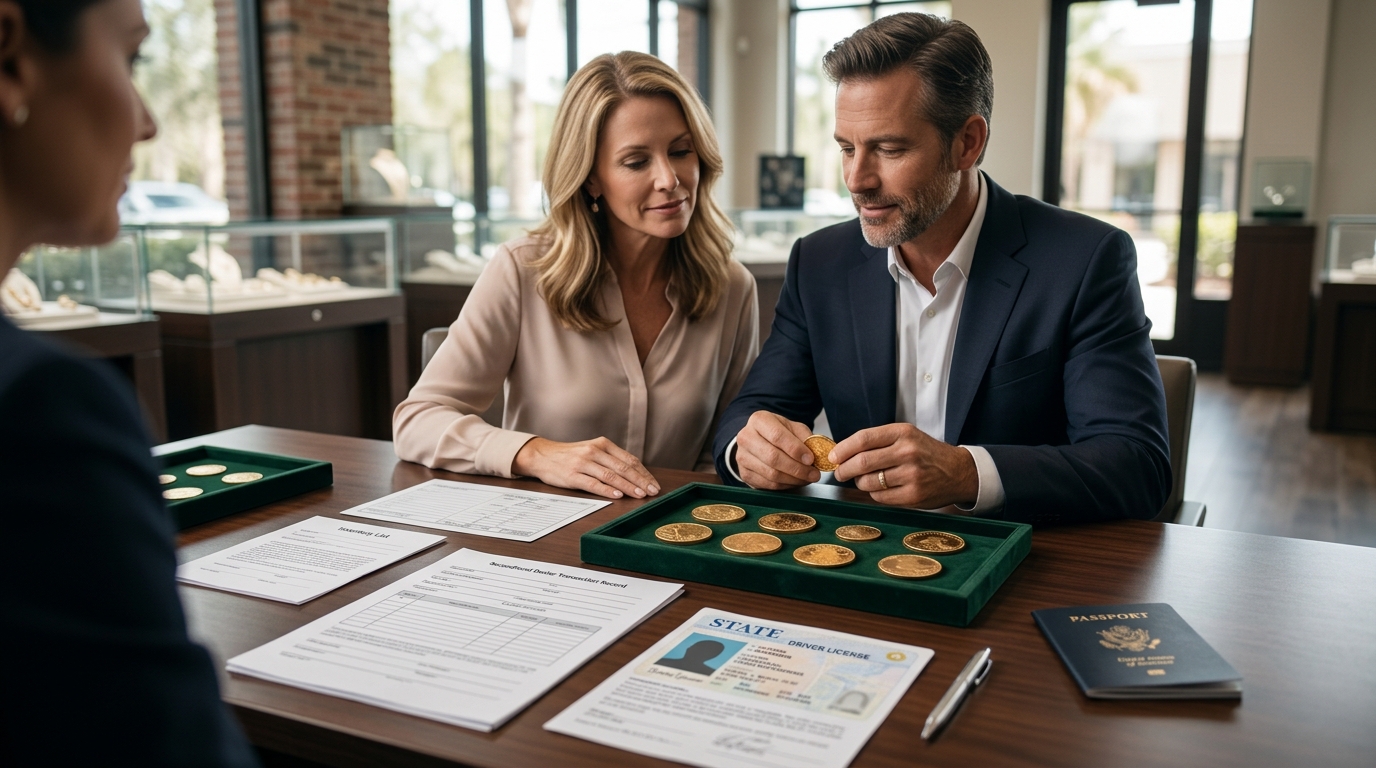
Thinking about selling gold coins at a local dealer? Before you walk through the door, it helps to know exactly what paperwork and identification you will need. Requirements vary by state, but in Florida the rules are clearly defined under Chapter 538, Florida Statutes. Bringing the right documents saves time, protects both parties, and ensures the transaction is fully legal. In this guide, we break down every document you should prepare, explain why dealers ask for them, and share tips for getting the best value when you sell your gold in Palm Beach County.
1. Government-Issued Photo ID
A government-issued photo ID is the single most important document you need. Florida law requires the presentation of a government-issued photo ID when selling secondhand goods, including precious metals. Acceptable forms typically include a valid driver's license, state-issued ID card, or current passport.
Your ID must display your current legal name and address. Dealers are required to record identifying details such as your full name, residential address, date of birth, and physical description. In many Florida jurisdictions, your right thumbprint is also collected on the transaction form.
2. Proof of Ownership
Proof of ownership is any documentation that establishes you legally possess the gold coins you intend to sell. While not always mandatory for small transactions, bringing supporting paperwork speeds up the process and can increase buyer confidence.
Common Proof-of-Ownership Documents
- Original purchase receipts from a coin dealer or mint
- Certificates of authenticity or grading certificates (PCGS, NGC)
- Inheritance or estate documentation (will, probate letter)
- Insurance appraisals listing specific coins
Florida law requires sellers to provide a sworn statement that they are the lawful owner of the goods with absolute authority to sell them. This declaration is typically included on the dealer's transaction form.
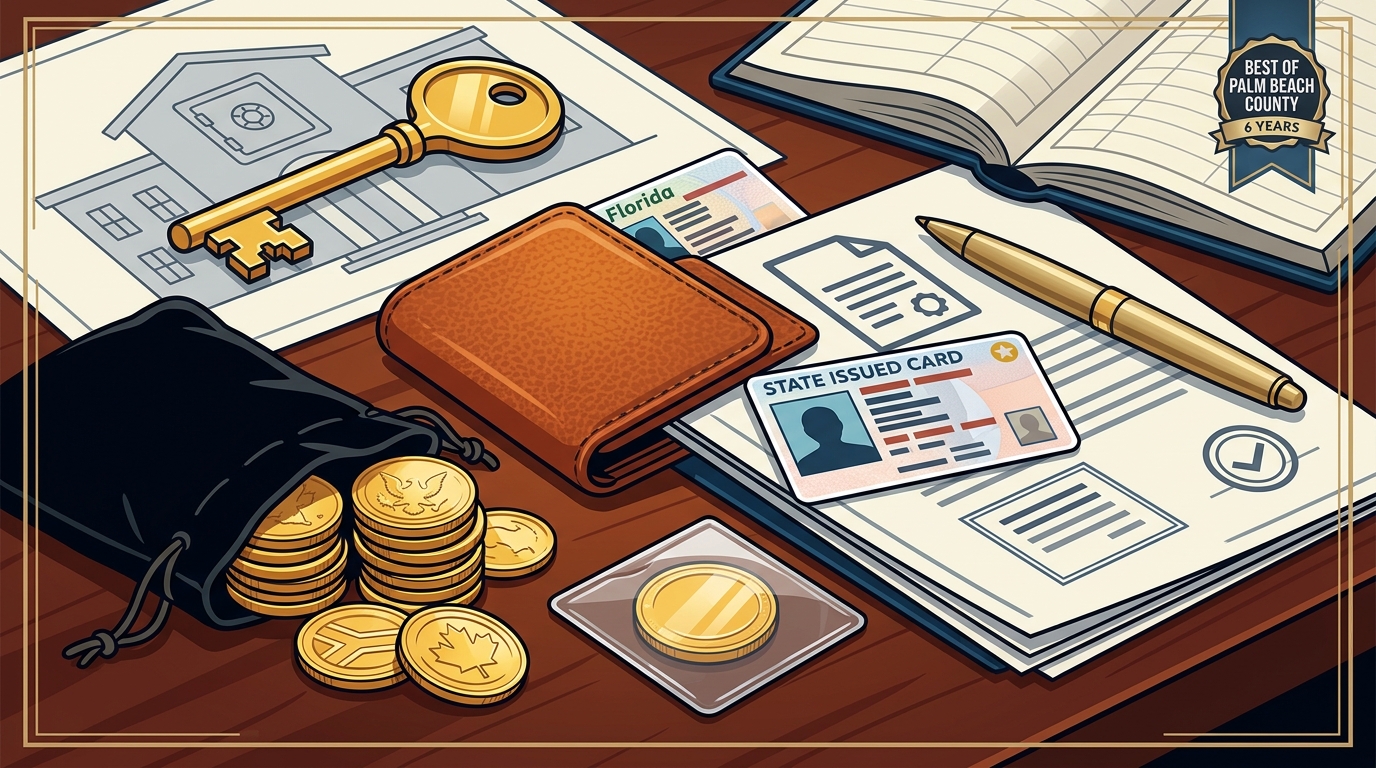
3. Florida-Specific Legal Requirements
Florida regulates precious metals transactions under Chapter 538, Florida Statutes. Licensed secondhand dealers must record detailed transaction information on a form approved by the Florida Department of Law Enforcement (FDLE). The form captures the time, date, and place of the transaction, a complete description of the goods, and a full description of the seller.
Holding Period
A holding period is a legally mandated waiting window during which a dealer cannot alter or resell purchased goods. Florida law imposes holding periods so law enforcement can verify items are not stolen. This means your coins may be held for a set number of days before the dealer processes them further.
Important Note on Coins vs. Secondhand Goods
Under Florida statute, coins and bullion may be treated differently from jewelry and other secondhand goods. Some coin-only transactions have lighter documentation requirements. However, reputable dealers like Lake Worth Gold Mine follow best practices and collect proper identification for every transaction.
| Document | Required? | Purpose |
|---|---|---|
| Government-issued photo ID | Yes (Florida law) | Identity verification |
| Right thumbprint | Yes (most FL jurisdictions) | Law enforcement records |
| Sworn ownership statement | Yes (on dealer form) | Legal proof of ownership |
| Purchase receipts | Recommended | Establishes provenance and cost basis |
| Grading certificates | Recommended | Confirms authenticity and grade |
| Inheritance/estate docs | If applicable | Proves legal transfer of ownership |
| IRS Form 1099-B | Dealer files if triggered | Tax reporting for qualifying sales |
4. IRS Reporting and Tax Documents
Federal tax rules can apply when you sell gold coins. When you sell certain gold items back to a dealer, they may be required to file Form 1099-B with the IRS, reporting the proceeds. This typically applies when selling bullion in quantities that meet CFTC futures contract thresholds, such as 25 or more Krugerrands or 25 or more Canadian Maple Leafs in a single transaction.
For cash transactions totaling $10,000 or more, the dealer must file a Currency Transaction Report (CTR). A CTR is a federal form that banks and dealers submit to FinCEN when cash payments hit the $10,000 threshold. Structuring transactions to avoid this limit is illegal.
Keep your original purchase records so you can accurately calculate capital gains or losses. Consulting a tax professional before selling high-value collections is always a smart move.
5. What to Expect During the Transaction
When you visit a trusted local buyer like Lake Worth Gold Mine, the process is straightforward. First, you present your photo ID and complete the dealer's transaction form. The dealer then examines and weighs your coins, tests purity, and references current daily metal prices to calculate an offer.
Most transactions take just minutes. Large lots with many items may require more time, so consider booking an appointment online to avoid waiting. Payment methods vary; for purchases of regulated metals property exceeding $1,000, Florida law requires the dealer to pay by check issued to the seller.
6. Tips for a Smooth Sale
- Gather documents ahead of time. Have your ID, receipts, and any certificates organized before your visit.
- Check spot prices. Review live metal prices so you know the current market value.
- Choose a reputable dealer. Lake Worth Gold Mine has been voted "Best of Palm Beach County" six years in a row. A trusted dealer ensures fair offers and full legal compliance.
- Bring coins in their original holders. Removing coins from certified slabs reduces their value.
- Ask about all payment options. Understand whether you will receive cash, check, or another payment method.
7. Key Takeaways
- A valid government-issued photo ID is legally required to sell gold coins in Florida.
- Dealers must record your identity details, a description of the goods, and a sworn ownership statement.
- Bringing purchase receipts and grading certificates can help you get a better offer.
- IRS Form 1099-B may apply for large bullion sales meeting CFTC contract thresholds.
- Cash transactions of $10,000 or more trigger a federal Currency Transaction Report.
- Florida's Chapter 538 governs precious metals transactions, including holding periods and recordkeeping.
- Visiting a reputable, award-winning buyer like Lake Worth Gold Mine ensures a safe, transparent experience.
8. Frequently Asked Questions
Do I need an ID to sell gold coins?
Yes. Florida law requires sellers to present a government-issued photo ID such as a driver's license, state ID, or passport. The dealer records your identifying information on a state-approved transaction form.
Can I sell gold coins without a receipt?
You can sell without an original purchase receipt. However, having receipts helps establish provenance and your cost basis for tax purposes. You will still need to sign a sworn statement confirming legal ownership.
What is the IRS reporting threshold for selling gold?
Dealers must file IRS Form 1099-B when you sell certain bullion types in quantities that meet CFTC futures contract specifications. Additionally, cash payments of $10,000 or more require a Currency Transaction Report.
Are gold coins considered secondhand goods in Florida?
Under Florida law, coins and bullion may be categorized differently from items like jewelry and watches. However, dealers still collect identification and maintain transaction records for all precious metals purchases.
How long does the dealer hold my coins before paying?
Florida law imposes a holding period on secondhand goods transactions. The length varies by local ordinance. Many dealers, including Lake Worth Gold Mine, can explain the specific timeline when you visit.
Do I need to pay taxes on my gold coin sale?
Gold coins are typically treated as collectibles by the IRS. If you sell at a profit, you may owe capital gains tax. Florida itself offers a sales tax exemption on gold, silver, and platinum sales. Consult a tax professional for personalized advice.
Is it safe to sell gold locally?
Selling at a reputable brick-and-mortar store is one of the safest options. Lake Worth Gold Mine operates a safe, stand-alone store at the Turnpike and Lake Worth Road in Palm Beach County, giving you a secure environment for high-value transactions.
What types of gold coins do local dealers buy?
Most local dealers buy American Eagles, Canadian Maple Leafs, South African Krugerrands, pre-1933 U.S. gold coins, and other sovereign mint coins. Lake Worth Gold Mine also buys gold bullion, silver, and estate jewelry.
Ready to Sell Your Gold Coins?
Gather your ID, any supporting documents, and your coins, then visit Lake Worth Gold Mine in Palm Beach County. Voted "Best of Palm Beach County" six years running, we offer fair, transparent pricing and a safe selling experience. Book your appointment today or stop by our store at the Turnpike and Lake Worth Road.