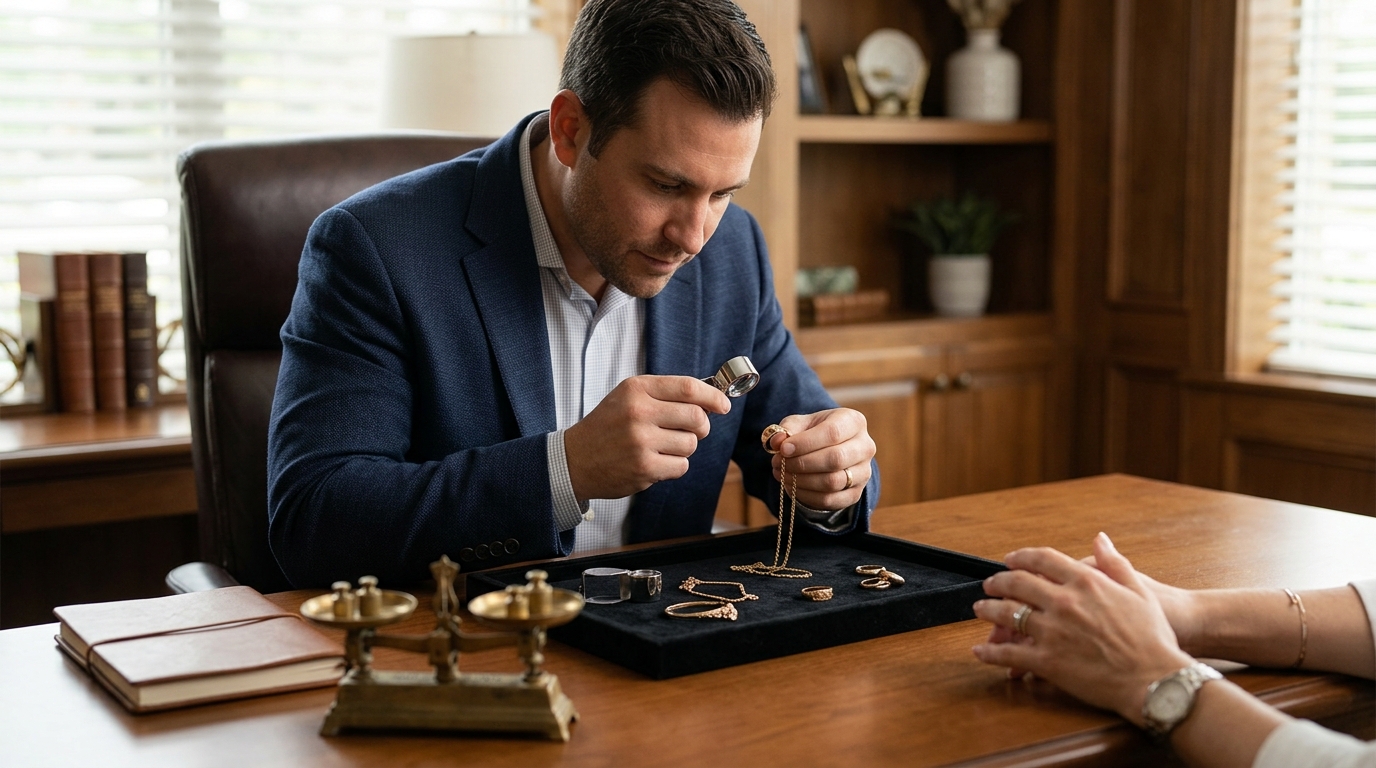
Thinking about selling gold jewelry? Before you walk into any buyer's shop, it helps to understand exactly how your pieces are evaluated. Gold jewelry valuation is not guesswork. Buyers use a clear, repeatable process rooted in measurable factors like karat purity, weight, and the current spot price of gold. Knowing these fundamentals puts you in a stronger negotiating position and helps you recognize a fair offer. In this guide, we break down every factor that professional gold buyers consider when determining the value of your jewelry.
What Is Karat Purity and Why It Matters Most
Karat is a unit that measures the proportion of pure gold in an alloy, with 24 karat representing 100% pure gold. Every piece of gold jewelry is an alloy, meaning pure gold is mixed with metals like copper, silver, or zinc to improve durability. The karat number tells a buyer exactly how much of that piece is actual gold.
Common Karat Levels in the U.S.
The most common karats in American jewelry are 10K (41.7% gold), 14K (58.5% gold), and 18K (75% gold). To find a piece's purity percentage, simply divide the karat number by 24. For example, 14 divided by 24 equals 0.583, or about 58.3% pure gold.
Where to Find Karat Stamps
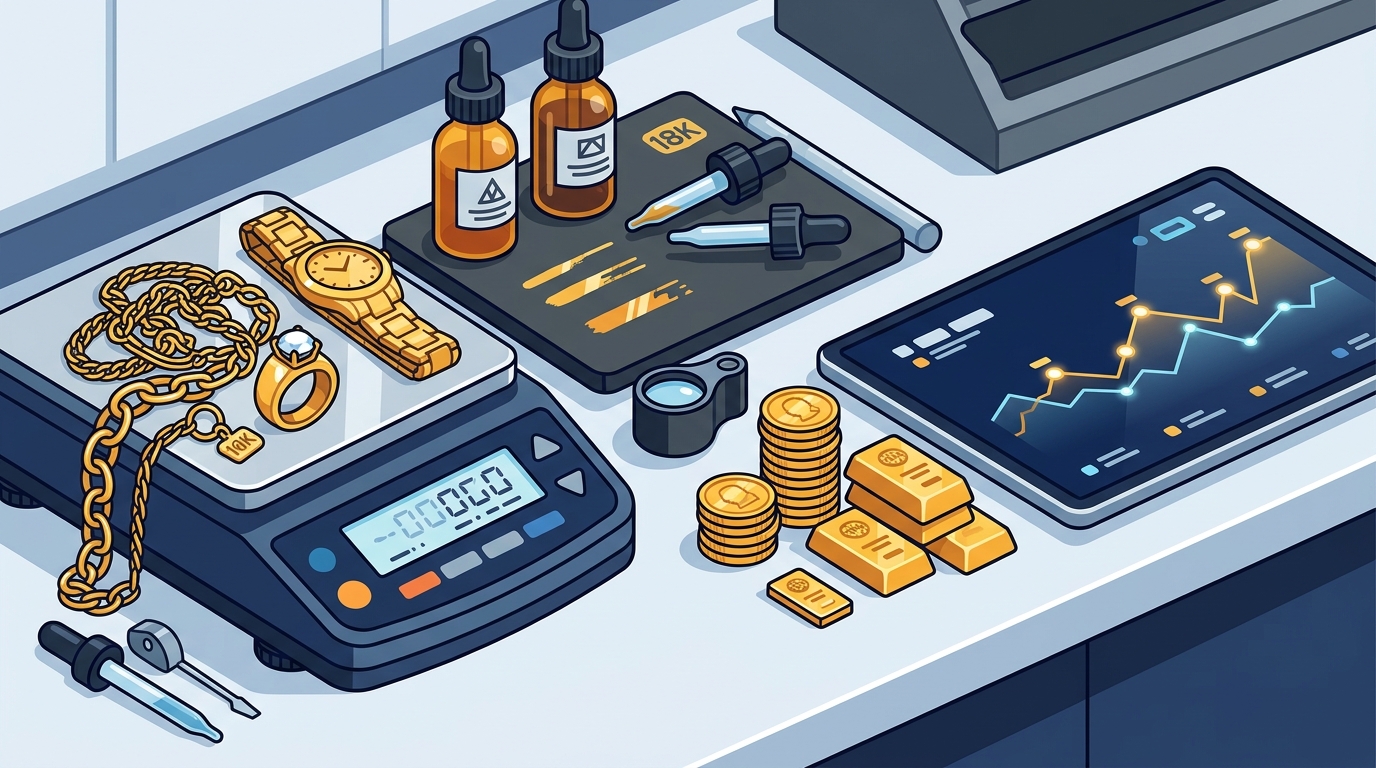
The karat stamp is typically found inside a ring band, on a necklace clasp, or on the back of a pendant. You may see markings like "14K" or numeric fineness stamps such as "585" or "750." However, not all stamps are accurate, and counterfeit stamps do exist, which is why professional testing matters. Reputable gold buyers will always verify purity before making an offer.
How Weight Affects Your Gold's Value
Weight is the second critical variable in gold valuation. Gold jewelry is weighed in grams using a precision digital scale. A heavier piece contains more total gold and commands a higher value. However, weight alone can be misleading without knowing the karat.
Consider this example: a 20-gram 10K necklace contains only 8.34 grams of pure gold, while a lighter 15-gram 18K bracelet contains 11.25 grams of pure gold. The lighter piece is actually worth more in gold content. That is why buyers always evaluate weight and karat together.
Understanding Melt Value: The Baseline Price
Melt value is the value of the raw gold content in a piece if it were melted down and refined into pure gold. This figure serves as the absolute minimum a reputable buyer should offer and acts as your negotiating floor in any transaction. The formula is straightforward:
Melt Value = Weight (grams) x Purity Fraction x Spot Price per Gram
What Buyers Actually Pay
Buyers typically offer 60-80% of the melt value to cover refining fees, market risk, and operating costs. A buyer offering 70% of melt value on a piece worth $900 in pure gold content would pay around $630. Understanding this margin helps you evaluate whether an offer is competitive. At Lake Worth Gold Mine's daily pricing page, you can check current metal prices before your visit.
The Role of the Gold Spot Price
The gold spot price is the real-time market rate for one troy ounce of pure gold. It fluctuates daily based on global supply and demand, currency movements, and economic conditions. One troy ounce equals 31.1035 grams, which is slightly heavier than a standard ounce.
Since the spot price changes every trading day, the same piece of jewelry can have a different melt value from one week to the next. Timing your sale when gold prices are strong can meaningfully increase your payout.
Factors Beyond Melt Value
While gold content drives the base offer, several additional factors can push the value higher.
Brand and Designer Identity
Pieces from recognized brands like Tiffany & Co., Cartier, or David Yurman often carry premiums above melt value. A signed designer bracelet sold for scrap destroys value that could be captured by selling it as a branded piece. Lake Worth Gold Mine evaluates estate and designer jewelry for both metal content and brand value.
Gemstones and Diamonds
Diamonds and precious gemstones set in gold jewelry add value above the gold itself. Buyers will assess the quality, size, and setting of any stones separately from the metal. If you have pieces with significant stones, a specialized jewelry buyer will give you a more complete valuation than a scrap-only buyer.
Age and Collectibility
Age alone does not increase gold jewelry value. However, genuinely antique pieces from recognized periods or notable makers may carry collector premiums. Most aged jewelry without documented historical significance is assessed based on its gold content.
Gold Karat Purity Comparison Table
| Karat | Gold Purity (%) | Fineness Stamp | Common Uses |
|---|---|---|---|
| 10K | 41.7% | 417 | Affordable everyday jewelry |
| 14K | 58.3% | 585 | Most popular U.S. jewelry standard |
| 18K | 75.0% | 750 | Fine and designer jewelry |
| 22K | 91.7% | 916 | Investment coins, cultural jewelry |
| 24K | 99.9% | 999 | Gold bars, bullion coins |
Key Takeaways
- Karat purity and weight are the two most important factors in gold jewelry valuation.
- Melt value is your negotiating floor. No reputable buyer should offer less.
- Buyers typically pay 60-80% of melt value to cover refining and operating costs.
- The gold spot price changes daily, so timing your sale matters.
- Designer brands, gemstones, and antique significance can add premiums above melt value.
- Always have your gold professionally tested rather than relying solely on karat stamps.
- Visiting a trusted local buyer like Lake Worth Gold Mine ensures transparent, fair pricing.
Frequently Asked Questions
How do gold buyers determine the value of my jewelry?
Buyers evaluate three core factors: the karat purity (which tells them the percentage of pure gold), the weight of the piece in grams, and the current gold spot price. They multiply these together to calculate the melt value, then apply a percentage-based offer.
What is melt value?
Melt value is the dollar amount your jewelry's pure gold content is worth at current market prices. It represents the value if the piece were melted and refined into pure gold. It is the baseline for any legitimate cash offer.
Why do buyers pay less than the full gold value?
Buyers must cover refining fees, the risk that gold prices could drop before processing, and their operating costs. Offers of 60-80% of melt value are standard across the industry.
Does the condition of my gold jewelry matter?
For pieces sold at melt value, physical damage has minimal impact because the gold content remains the same regardless of shape or condition. Broken chains and bent rings are typically assessed at standard melt rates.
Can designer jewelry be worth more than melt value?
Yes. Pieces from brands like Tiffany, Cartier, or David Yurman may command premiums. A knowledgeable buyer will evaluate the brand, craftsmanship, and demand rather than simply scrapping the piece.
How do I know if my gold is real?
Look for karat stamps such as 10K, 14K, or 18K, or fineness numbers like 417, 585, or 750. For certainty, have the piece professionally tested with acid testing or electronic gold testers. Visit Lake Worth Gold Mine for a free evaluation.
Is gold-plated jewelry worth anything?
Gold-plated items contain only a thin outer layer of gold, so their melt value is minimal compared to solid gold. Most buyers pay very little for plated pieces.
When is the best time to sell gold jewelry?
Sell when the gold spot price is high. Monitor daily prices on resources like Lake Worth Gold Mine's daily metal prices page to find the right moment.
Get a Free Gold Jewelry Evaluation in Palm Beach County
Ready to find out what your gold jewelry is really worth? Lake Worth Gold Mine, voted Best of Palm Beach County 6 years in a row, offers free, no-obligation evaluations on gold, diamonds, watches, coins, and estate jewelry. Our safe, standalone store is conveniently located at the Turnpike and Lake Worth Road. Book your appointment online or stop by during business hours for a transparent, professional assessment.