
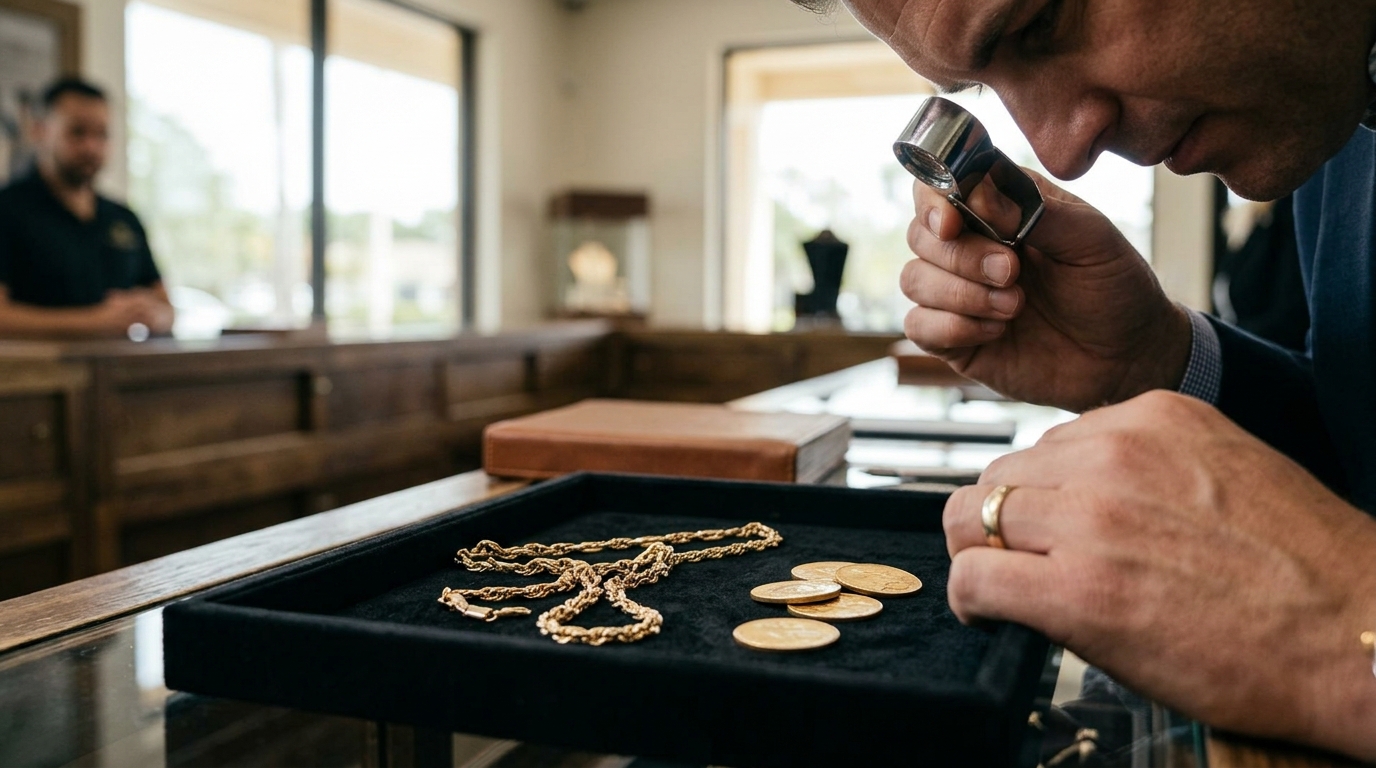
If you have gold jewelry sitting in a drawer, you have probably wondered what it is actually worth. The answer depends on several measurable factors that professional gold buyers evaluate before making an offer. Understanding how buyers determine the value of your gold jewelry helps you walk into any transaction with confidence. In this guide, we break down every step of the valuation process, from karat purity and weight to market pricing and craftsmanship, so you know exactly what to expect when you sell your gold in Palm Beach County.
What Is Karat Purity and Why It Matters Most
Karat purity is the single biggest factor in determining gold jewelry value. A karat is a unit of purity for gold alloys, measured per 24 parts whole. Pure gold with no added metals is rated 24 karat (24K), which equals 99.9% gold content. To find the purity percentage of any karat value, you simply divide the karat number by 24, as explained by the International Gem Society.
Most jewelry is not pure gold. The standard karat values you will encounter are 10K (41.7%), 14K (58.3%), 18K (75%), and 22K (91.7%). Higher karat means more gold content and greater value per gram. However, higher karat gold is also softer, which is why 14K and 18K are the most common choices for everyday jewelry.
How Gold Weight Is Measured
Weight is the second critical variable in gold valuation. Gold weight is typically measured in grams or troy ounces. A troy ounce equals 31.10 grams, which differs from a standard ounce (28.35 grams). Some buyers also use pennyweights (dwt), where 1 pennyweight equals 1.555 grams.
Why Accurate Scales Matter
Professional gold buyers use precision digital scales calibrated to at least 0.01 grams. When you sell your items, the weight should always be measured in front of you. Any gemstones or non-gold components are excluded from the gold weight calculation.
The Role of the Daily Gold Spot Price
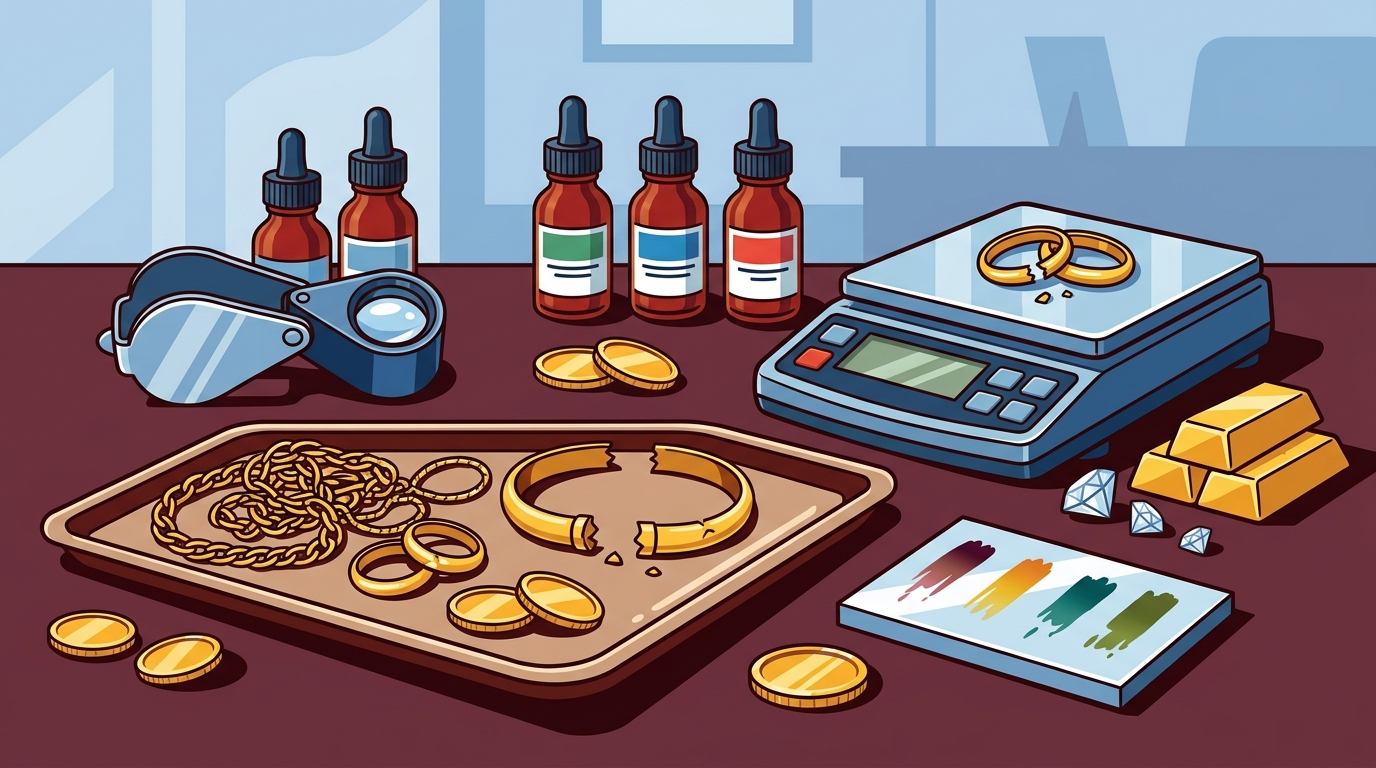
The gold spot price is the current market price for one troy ounce of pure gold, and it fluctuates throughout every trading day based on global supply and demand. You can track live pricing on the Lake Worth Gold Mine daily metal prices page.
Once a buyer knows your jewelry's weight and purity, they calculate the melt value using this formula: (Weight in grams x Purity percentage) x Spot price per gram = Melt value. For example, a 14K ring weighing 11 grams contains about 6.41 grams of pure gold (11 x 0.583). If gold trades at $95 per gram that day, the melt value is approximately $608.95.
Testing Methods Buyers Use
Reputable buyers never rely solely on the stamp on your jewelry. Hallmark stamps can be worn, missing, or even counterfeit. Professional gold buyers use one or more testing methods to verify purity before making an offer.
Acid Testing
Acid testing is a traditional method where a small scratch of gold is placed on a testing stone and treated with nitric acid solutions of varying strengths. Each acid corresponds to a specific karat level. This is the most widely used field test in the industry.
Electronic Testing
Electronic gold testers use electrical conductivity to measure purity without damaging the piece. These devices provide fast, non-destructive readings and are increasingly popular among trusted buyers.
XRF Analysis
X-ray fluorescence (XRF) analysis is a high-precision, non-destructive method used by advanced buyers and refineries. It provides exact composition data for the gold alloy.
Factors Beyond Melt Value
While melt value sets the baseline, several additional factors can increase what a buyer offers for your jewelry.
Brand and Designer Premiums
Pieces from recognized brands like Tiffany, Cartier, or David Yurman often carry a premium above melt value. If you own designer or estate jewelry, a knowledgeable buyer will factor brand recognition into their offer.
Craftsmanship and Condition
Intricate craftsmanship, antique value, or historical significance can add value. A well-preserved Art Deco bracelet, for instance, may be worth significantly more than its gold content alone. Condition matters too; pieces in wearable condition command better offers than damaged items destined for the refinery.
Gemstones and Diamonds
Diamonds and precious gemstones are valued separately from the gold. Trusted buyers like the Lake Worth Gold Mine evaluate stones individually for cut, clarity, carat weight, and color. Learn more about how we assess these on our gold buying page.
Gold Karat Comparison Chart
| Karat | Gold Purity (%) | Fineness Stamp | Common Use |
|---|---|---|---|
| 10K | 41.7% | 417 | Budget jewelry, class rings |
| 14K | 58.3% | 585 | Most U.S. jewelry |
| 18K | 75.0% | 750 | Fine jewelry, European pieces |
| 22K | 91.7% | 916 | High-end, cultural jewelry |
| 24K | 99.9% | 999 | Bullion, investment gold |
Key Takeaways
- Karat purity is the primary factor in gold jewelry valuation; divide the karat number by 24 to get the gold percentage.
- Weight is measured in grams or troy ounces (1 troy oz = 31.10 g), and must be weighed precisely.
- The daily gold spot price sets the baseline market rate and changes constantly.
- Melt value is calculated as (weight x purity) x spot price per gram.
- Professional buyers use acid tests, electronic testers, or XRF analysis to verify purity.
- Designer brands, craftsmanship, and gemstones can increase value above the melt price.
- Always sell to a reputable, transparent buyer who tests and weighs your gold in front of you.
Frequently Asked Questions
What is the most common karat for gold jewelry in the United States?
14K gold is the most common karat for jewelry sold in the United States. It contains 58.3% pure gold and offers a good balance of durability and value.
How do gold buyers test jewelry purity?
Buyers typically use acid testing, electronic gold testers, or XRF (X-ray fluorescence) analysis. Each method verifies how much pure gold is present in the alloy.
Does the brand of my jewelry affect its value?
Yes. Jewelry from well-known designers like Tiffany, Cartier, or David Yurman can command a premium above the melt value of the gold. A knowledgeable buyer will assess brand value separately.
What is gold melt value?
Gold melt value is the worth of the pure gold content in a piece of jewelry, calculated by multiplying the weight of pure gold by the current spot price. It does not account for craftsmanship, gemstones, or brand.
How is the weight of gold jewelry measured?
Gold is weighed in grams or troy ounces using precision digital scales. Non-gold components like gemstones are excluded from the measurement.
Where can I sell gold jewelry in Palm Beach County?
The Lake Worth Gold Mine is voted Best of Palm Beach County 6 years in a row. Located at Turnpike and Lake Worth Road, they offer transparent, on-the-spot evaluations. You can also check customer reviews before your visit.
Does the current gold price affect what I get for my jewelry?
Absolutely. The spot price of gold changes daily and directly impacts your offer. Check the daily metal prices before visiting a buyer so you have a baseline expectation.
Should I sell broken gold jewelry?
Yes. Broken gold jewelry still has melt value based on its weight and purity. Buyers like the Lake Worth Gold Mine purchase broken chains, single earrings, and damaged pieces at competitive rates.
Get a Fair Offer for Your Gold Jewelry Today
Ready to find out what your gold jewelry is worth? Visit the Lake Worth Gold Mine, voted Best of Palm Beach County 6 years running, for a free, no-obligation evaluation. Our experts test and weigh your gold right in front of you. Book an appointment online or stop by our safe, stand-alone store at Turnpike and Lake Worth Road.