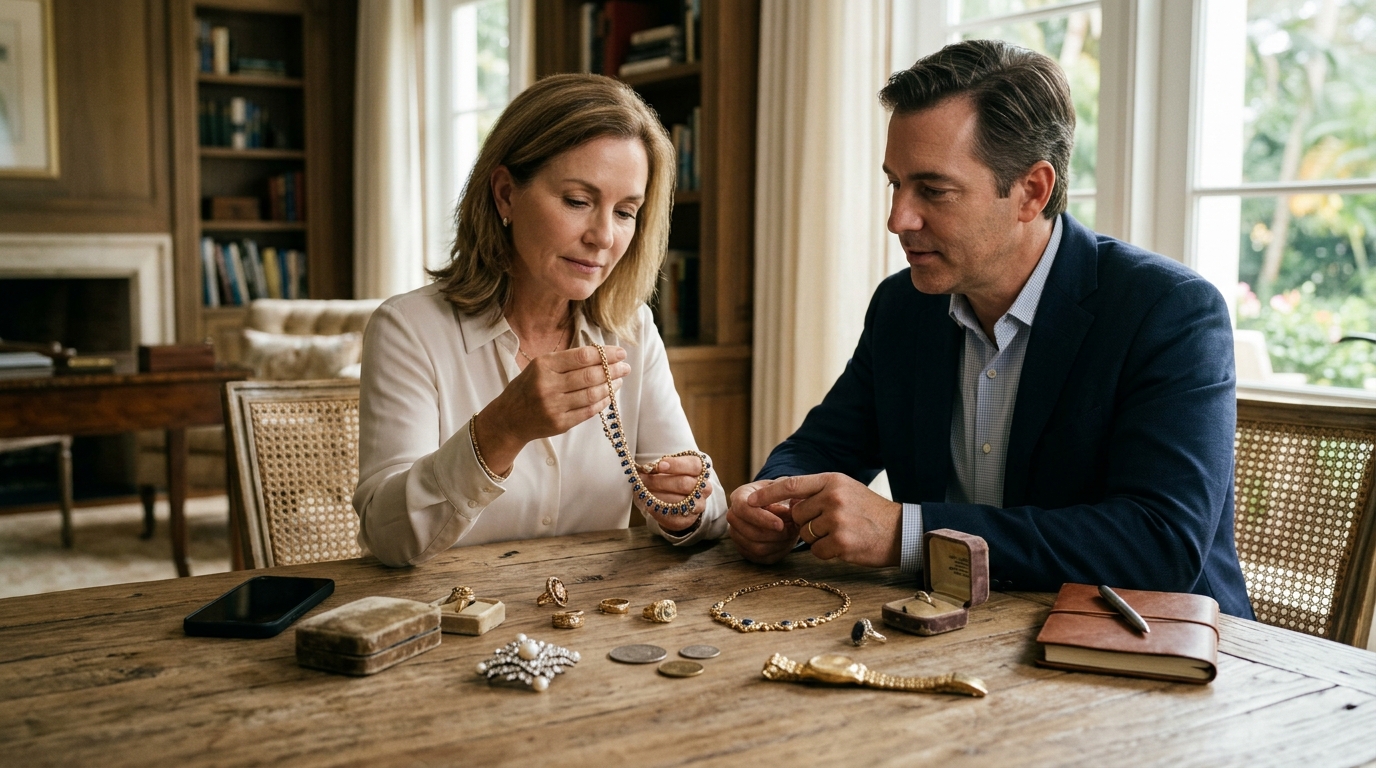
Selling estate jewelry can feel overwhelming, especially when sentimental value clouds your judgment about what pieces are actually worth. Whether you inherited a collection from a loved one or you are settling an estate in Palm Beach County, knowing what to look for before you sell is the key to getting a fair price. Estate jewelry is any previously owned jewelry, regardless of its age. From gold rings and diamond brooches to designer watches and vintage necklaces, every piece has factors that determine its market value. This guide walks you through the essential steps so you can sell with confidence.
Understand What You Have
Before you visit any buyer, take time to inventory every piece in your collection. Photograph items from multiple angles, including close-ups of any stamps, clasps, or stones. Record the metal type, stone types, approximate size, and overall condition of each item.
The determining factors of estate jewelry value are style, condition, and intrinsic worth. A signed designer piece from a recognized house like Cartier or Tiffany & Co. can be worth significantly more than its raw metal weight. Separating costume jewelry from fine jewelry early saves you and the buyer valuable time.
Separate Sentimental Value from Market Value
A potential buyer is not emotionally attached to your jewelry. Sentimental value may raise the price in your eyes, but it does not translate to dollars on the market. Be honest with yourself about which pieces you want to keep and which are better sold. If you are ready to part with items, visit our estate jewelry buying page to learn how we evaluate pieces at Lake Worth Gold Mine.
Check Hallmarks and Markings
Hallmarks are small stamps on jewelry that indicate metal purity and origin. A hallmark is a standardized mark stamped on precious metals to certify their content. Common stamps include "14K" or "585" for 14-karat gold, "925" for sterling silver, and "PT950" for platinum.
Designer marks from brands like David Yurman or Van Cleef & Arpels significantly increase a piece's value beyond the metal alone. Look on the inside of rings, the clasp of necklaces, and the back of pendants. If you find markings you cannot identify, bring the piece to a trusted local buyer like Lake Worth Gold Mine's gold buying experts.
Get a Professional Appraisal
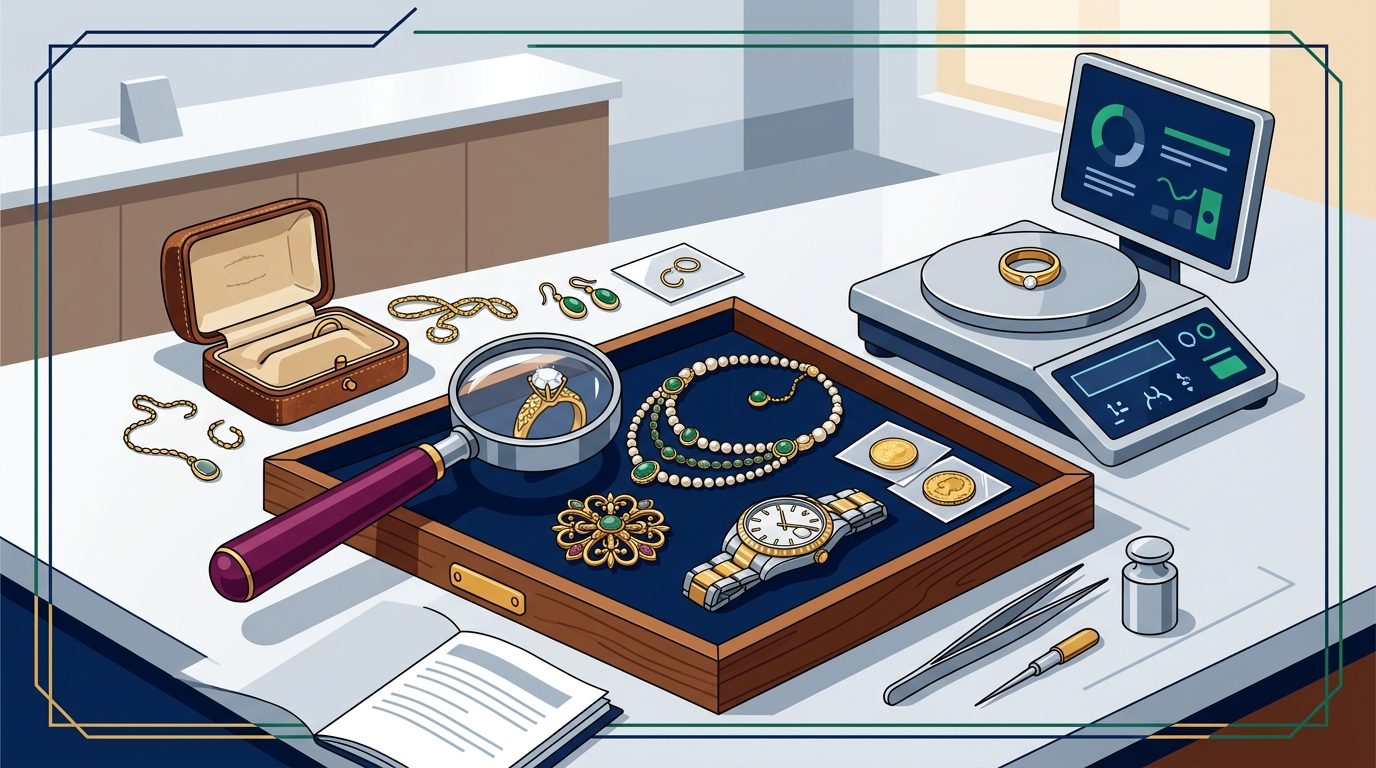
An appraisal is a professional assessment of a piece's quality, authenticity, and estimated market value. Experts recommend getting two to three independent appraisals so you can compare and identify any outliers.
For gemstones, consider obtaining a Gemological Institute of America (GIA) grading report. A GIA report acts like a birth certificate for precious gemstones, verifying quality and preventing undervaluation. Knowing your gem's grade and rarity helps you understand its true contribution to the overall piece value.
What an Appraiser Evaluates
| Factor | What It Covers | Impact on Value |
|---|---|---|
| Metal Content | Gold, silver, platinum purity | Sets the baseline melt value |
| Gemstones | Type, cut, clarity, carat, origin | Can represent up to 99% of value |
| Condition | Scratches, chips, repairs, patina | Poor condition reduces value significantly |
| Designer/Brand | Maker's marks, original packaging | Designer pieces command premium prices |
| Rarity & Demand | One-of-a-kind status, current trends | Rare, in-demand pieces sell for more |
Know the Melt Value vs. Market Value
Melt value is what the precious metals in a piece would be worth if melted down. It represents the floor price for gold, silver, or platinum jewelry. You can check current spot prices on our daily metal prices page.
Market value, on the other hand, accounts for craftsmanship, brand name, historical significance, and collector demand. A vintage Rolex or an Art Deco diamond ring will almost always command more than melt value. Understanding the gap between these two numbers puts you in a stronger negotiating position.
Prepare Your Pieces for Sale
Presentation matters, but proceed with caution. A gentle wipe with a soft cloth is fine for most pieces. Avoid ultrasonic cleaners or harsh chemical solutions on antique jewelry, as aggressive cleaning can damage the patina that collectors actually value.
Keep Original Packaging
If you have the original box, certificate of authenticity, or receipt, include them. Original packaging from brands like Tiffany or Cartier increases the prestige and resale value of the piece. Keep matching sets together, as earrings, necklaces, and bracelets from the same collection are worth more sold as a group.
Document Everything
Disclose any known repairs, replaced stones, or alterations upfront. Transparency builds trust with buyers and prevents disputes after the sale. Bring any existing appraisals or GIA reports to your appointment.
Choose the Right Buyer
Where you sell matters as much as what you sell. Pawn shops typically offer the lowest prices because they buy with the intention of reselling for profit. Auction houses can deliver higher returns through competitive bidding, but the process takes time and involves fees.
For most people in Palm Beach County, a reputable local jewelry buyer offers the best combination of fair pricing, speed, and safety. Look for a buyer with strong reviews, community recognition, and transparent evaluation practices. Lake Worth Gold Mine has been voted "Best of Palm Beach County" six years in a row and operates from a safe, standalone store at Turnpike and Lake Worth Road. Visit our customer reviews to see what sellers say about their experience.
You can also book an appointment online for a no-obligation evaluation of your estate jewelry, luxury watches, gold coins, and more.
Key Takeaways
- Inventory and photograph every piece before visiting a buyer.
- Check for hallmarks such as "14K," "925," or designer stamps to identify metal content and brand.
- Get two to three professional appraisals to understand fair market value.
- Learn the difference between melt value and market value so you know your floor price.
- Avoid aggressive cleaning on antique pieces; let professionals handle delicate items.
- Keep original packaging, certificates, and matching sets together to maximize value.
- Choose a reputable, community-recognized buyer rather than a pawn shop for the best return.
Frequently Asked Questions
What is estate jewelry?
Estate jewelry is any previously owned jewelry, regardless of age. It includes everything from antique Victorian brooches to modern designer rings that were part of someone's personal collection.
How do I know if my estate jewelry is valuable?
Check for hallmarks indicating precious metal content, look for designer maker's marks, and get a professional appraisal. Pieces with high-quality gemstones, recognized brand names, or historical significance tend to hold the most value.
Should I clean estate jewelry before selling it?
A gentle wipe with a soft cloth is fine, but avoid harsh chemicals or ultrasonic cleaners on antique pieces. Aggressive cleaning can remove patina that collectors prize and may damage delicate settings.
How many appraisals should I get?
Experts recommend getting at least two to three independent appraisals. This gives you a balanced perspective on your piece's value and helps you spot any lowball offers.
What is the difference between melt value and market value?
Melt value is what the raw precious metals would be worth if melted down. Market value includes additional factors like craftsmanship, brand, rarity, and collector demand, and is often significantly higher for quality pieces.
Is it better to sell estate jewelry at auction or to a local buyer?
Auctions can yield higher returns through competitive bidding but involve fees and waiting periods. A reputable local buyer like Lake Worth Gold Mine provides immediate payment, transparent evaluation, and a safe in-person experience.
What documents should I bring when selling estate jewelry?
Bring any existing appraisals, GIA grading reports, certificates of authenticity, original receipts, and the original packaging. These documents help the buyer evaluate your pieces accurately and can increase the offer.
Why should I avoid pawn shops for estate jewelry?
Pawn shops typically pay significantly less than other buyers because their business model relies on reselling items at a profit. A dedicated jewelry or gold buyer with gemological expertise will generally offer a fairer price based on actual market value.
Ready to Sell Your Estate Jewelry?
Lake Worth Gold Mine makes selling estate jewelry simple, safe, and rewarding. Bring your pieces to our standalone store at Turnpike and Lake Worth Road in Palm Beach County for a free, no-obligation evaluation. Book your appointment today and discover why we have been voted Best of Palm Beach County six years running.